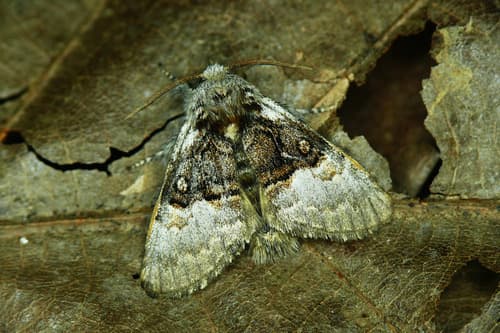
Nut-Tree Tussock
Common NameNut-Tree Tussock
Scientific NameColocasia coryli
FamilyNoctuidae
SubfamilyPantheinae
Wingspan (mm)35
Wing Patterncryptic
Primary Colorsgrey, white, brown, black
HabitatDeciduous woodlands, parks, gardens, hedgerows
Geographic RangeEurope, parts of Asia
Host Plantshazel, birch, oak, hornbeam, alder, lime
Flight PeriodMay to August
Flight Stylefluttering
Conservation Statusleast-concern
Lifecycle NotesThe larvae are hairy, typically green or brown with tufts of hair, feeding on various deciduous trees and shrubs. They pupate in a cocoon amongst leaf litter or bark.
Identification TipsLook for the distinctive mottled grey and white forewing pattern, particularly the white patch near the outer margin and the dark, wavy lines. The hairy body and antennae are also characteristic.
Description
A medium-sized moth with cryptic, mottled forewings in shades of grey, white, and brown, often featuring a prominent white patch near the tornus and dark, wavy cross-lines. The body is stout and hairy.