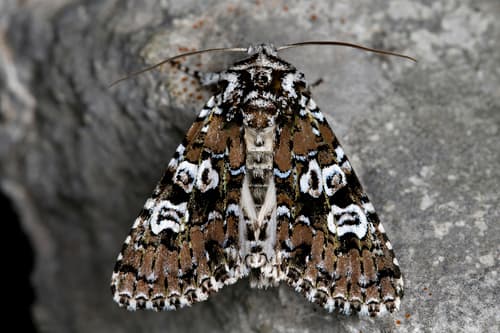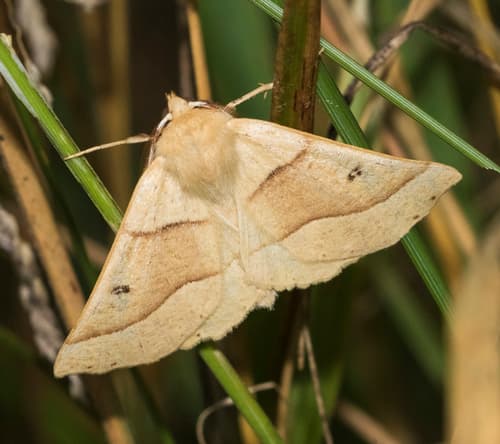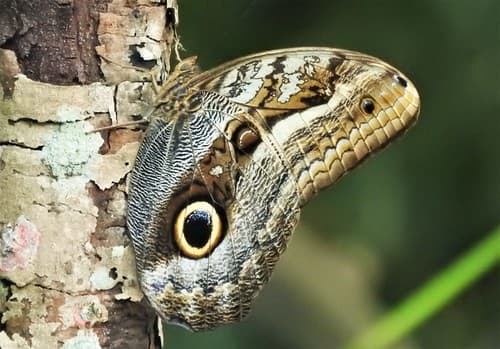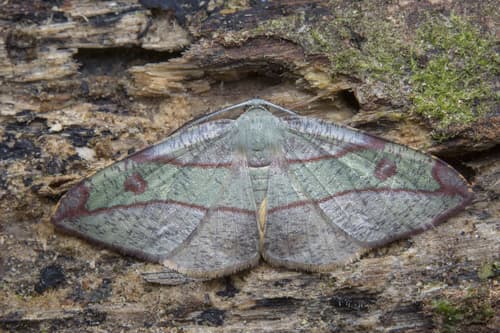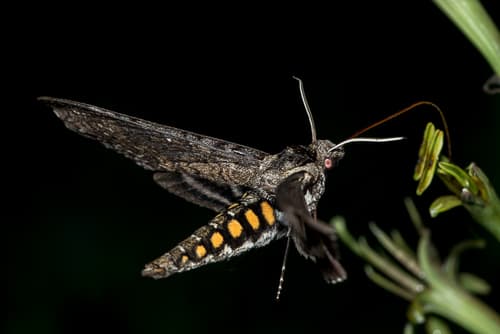
Occult Sphinx
Common NameOccult Sphinx
Scientific NameManduca occulta
FamilySphingidae
SubfamilySphinginae
Wingspan (mm)100
Primary Colorsgrey, brown, black, orange
HabitatTropical and subtropical forests, woodlands, disturbed areas, gardens
Geographic RangeSouthern United States (Florida, Texas, Arizona, California), Mexico, Central America, South America
Host PlantsSolanum spp., Nicotiana spp., Datura spp., Cestrum spp.
Flight PeriodYear-round in tropical regions; multiple broods from spring to fall in temperate parts of its range
Conservation Statusleast-concern
Lifecycle NotesUndergoes complete metamorphosis; larvae are typically green or brown with diagonal stripes and a caudal horn, feeding on Solanaceae plants before pupating in the soil.
Identification TipsKey identification features include its large size, the cryptic grey-brown forewing pattern, and most notably, the prominent orange-yellow and black banding along the sides of its abdomen.
Description
A large sphinx moth characterized by its mottled grey-brown forewings and a robust abdomen with distinctive lateral orange-yellow and black bands. It possesses a long proboscis for feeding.