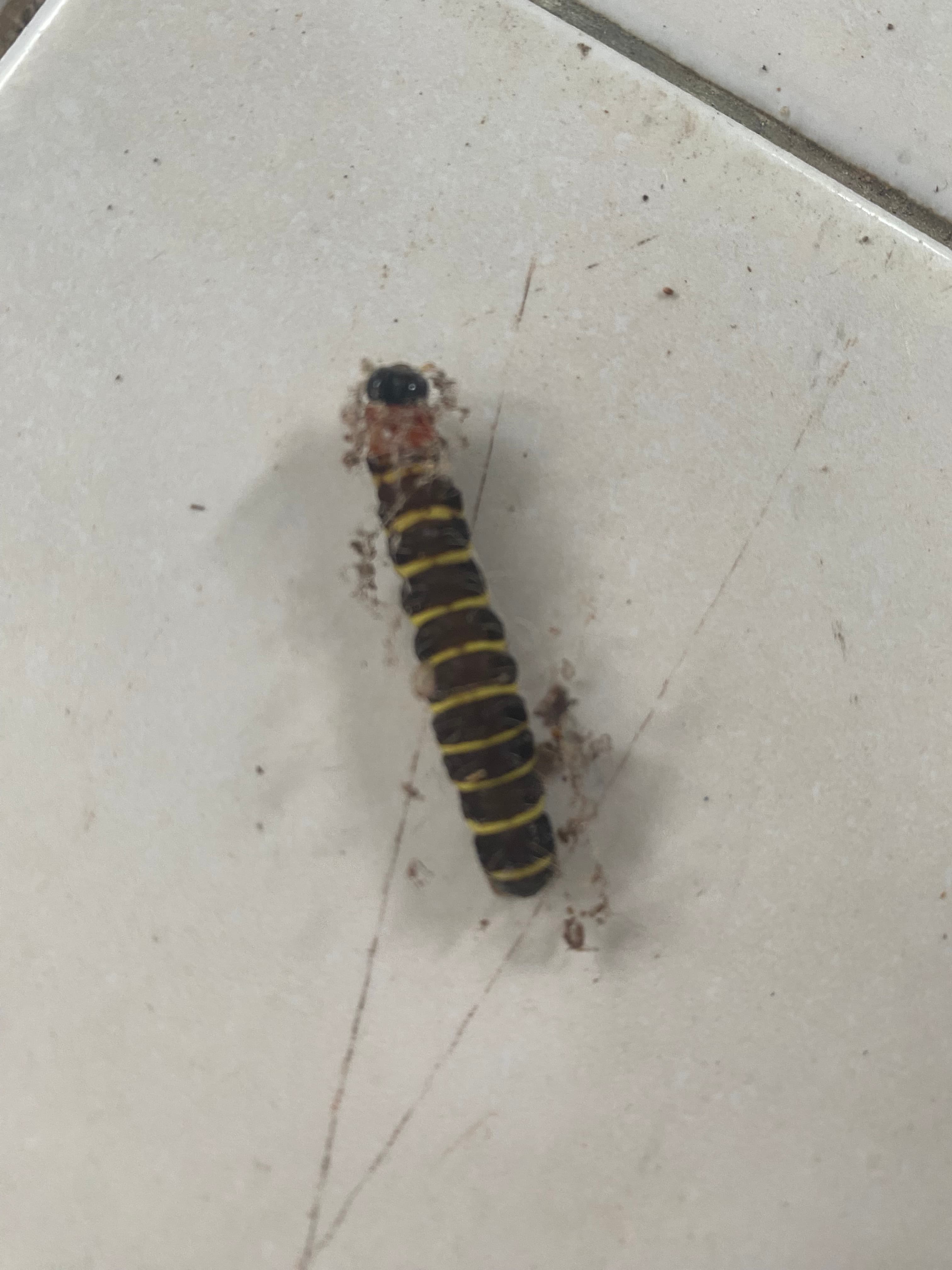
Oleander Moth
Image: Dreameryonmae (CC BY 4.0)
Common NameOleander Moth
Scientific NameSyntomeida epilais
FamilyErebidae
SubfamilyArctiinae
Wingspan (mm)40
Wing Patternspotted
Primary Colorsblack, white, metallic blue-green, red
HabitatGardens, parks, urban areas, and subtropical scrublands where oleander grows
Geographic RangeSouthern United States (Florida, Gulf Coast), Caribbean, Central America, South America
Host PlantsNerium oleander, Allamanda, Catharanthus
Flight PeriodYear-round in tropical and subtropical regions
Flight Styledarting
Conservation Statusleast-concern
Lifecycle NotesEggs are laid in clusters on host plant leaves. Caterpillars feed gregariously, often skeletonizing leaves, before pupating in silken cocoons near the host plant.
Identification TipsAdults are recognized by their metallic blue-green body, black wings with white spots, and red abdominal tip. Caterpillars are easily identified by their black body with bright yellow bands, black head, and reddish-orange segment behind the head, typically found on oleander plants.
Description
The adult Oleander Moth has a metallic blue-green body, black wings with prominent white spots, and a distinctive red-tipped abdomen. Its caterpillar is black with bright yellow bands on each segment, a reddish-orange neck, and a black head.