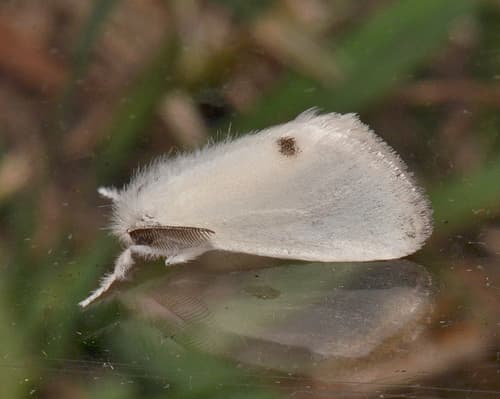
Omnivorous Tussock Moth
Common NameOmnivorous Tussock Moth
Scientific NameEuproctis similis
FamilyErebidae
SubfamilyLymantriinae
Wingspan (mm)40
Wing Patternspotted
Primary Colorswhite, brown
HabitatWoodlands, gardens, parks, hedgerows, orchards
Geographic RangeEurope, Asia (Palearctic region), introduced to North America (Pacific Northwest)
Host Plantshawthorn, cherry, plum, willow, oak, birch, rose, apple, pear, bramble
Flight PeriodJune to August
Flight Stylefluttering
Conservation Statusleast-concern
Lifecycle NotesLarvae are hairy, dark with red and white markings, and possess urticating hairs. They overwinter as small larvae, pupate in cocoons often incorporating larval hairs, and emerge as adults in summer.
Identification TipsKey features include its pure white wings and body, the single dark brown spot on the forewing, and the often bright yellow or orange anal tuft in females. Males have strongly pectinate antennae.
Description
A medium-sized, fluffy white moth with a single prominent dark brown spot on each forewing. The body is also white and densely hairy.