Orbiculate Quaker
Common NameOrbiculate Quaker
Scientific NameAgrotis orbiculata
FamilyNoctuidae
SubfamilyNoctuinae
Wingspan (mm)34
Wing Patterncryptic
Primary Colorsgrey-brown, brown, black
HabitatOpen woodlands, grasslands, heathlands, gardens
Geographic RangeCentral and Eastern Europe, parts of Asia
Host Plantsvarious grasses, plantain, dock, dandelion
Flight PeriodMay to October (bivoltine)
Flight Stylefluttering
Conservation Statusleast-concern
Lifecycle NotesLarvae are cutworms, feeding at night on roots and lower stems of herbaceous plants and grasses, hiding in the soil by day. Pupation occurs underground, and the species overwinters as a larva or pupa.
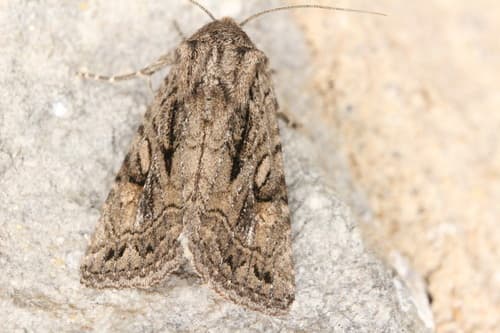
Identification TipsDistinguished by its overall greyish-brown forewing coloration and the characteristic shape and clarity of its orbicular spot, which is typically round and well-defined, along with the reniform spot and transverse lines.
Description
A medium-sized moth with cryptically patterned forewings, typically greyish-brown to yellowish-brown, marked with darker transverse lines and distinct, often roundish, orbicular and reniform spots.