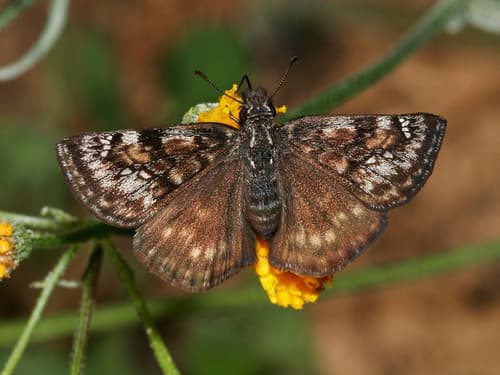
Pacuvius Duskywing
Common NamePacuvius Duskywing
Scientific NameErynnis pacuvius
FamilyHesperiidae
SubfamilyPyrginae
Wingspan (mm)32
Primary Colorsdark brown, white, black
HabitatOpen woodlands, chaparral, canyons, mountain slopes
Geographic RangeWestern North America, from British Columbia south through the Rocky Mountains to Arizona and New Mexico
Host PlantsCeanothus velutinus, Ceanothus fendleri, other Ceanothus species
Flight PeriodMay to July
Flight Styledarting
Conservation Statusleast-concern
Lifecycle NotesEggs are laid singly on the host plant leaves. Larvae feed on the leaves, creating shelters by tying leaves together with silk. Pupation occurs in a loose cocoon near the ground, and the species typically overwinters as a larva or pupa.
Identification TipsDistinguished from other duskywings by the specific pattern of white and light brown mottling on the forewings, often lacking prominent hyaline spots. The overall cryptic coloration helps it blend into its environment.
Description
A dark brown skipper with heavily mottled forewings featuring irregular white and lighter brown patches, particularly noticeable on the outer half and along the costa. The hindwings are a more uniform dark brown with a few faint, lighter spots.