Pahaska Skipper
Common NamePahaska Skipper
Scientific NameHesperia pahaska
FamilyHesperiidae
SubfamilyHesperiinae
Wingspan (mm)30
Wing Patternspotted
Primary Colorsorange, olive-green, white
HabitatPrairies, open grasslands, dry meadows, sagebrush steppe, open pine forests
Geographic RangeWestern North America, from southern Canada through the Great Plains and Rocky Mountains to Arizona, New Mexico, and Texas
Host Plantsgrama grass, buffalo grass, other prairie grasses
Flight PeriodMay to July (sometimes a second brood in August-September in southern regions)
Flight Styledarting
Conservation Statusleast-concern
Lifecycle NotesLarvae feed on various grasses, constructing shelters from silk and leaves. Pupation occurs in a silken cocoon near the ground, leading to a single or sometimes two broods per year.
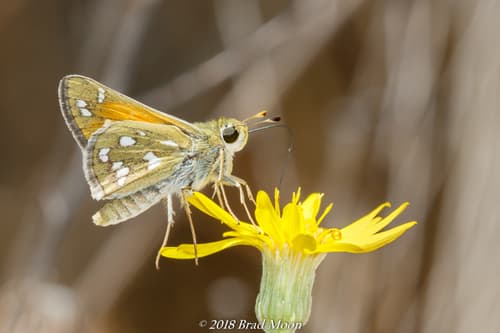
Identification TipsKey features include the stout body, hooked antennae, and the olive-green to yellowish-brown underside of the hindwing with a distinct band of white spots. Males have a prominent black stigma on the forewing upperside.
Description
A medium-sized skipper with an orange-brown upperside and a distinctive olive-green to yellowish-brown underside of the hindwing, marked with a band of prominent white spots.