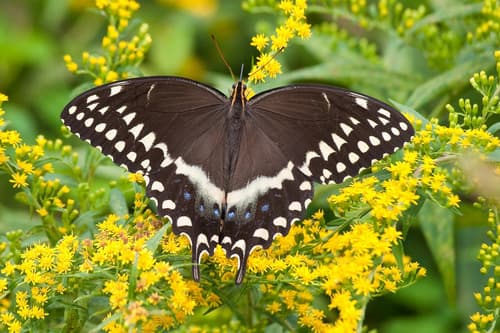
Palamedes Swallowtail
Common NamePalamedes Swallowtail
Scientific NamePapilio palamedes
FamilyPapilionidae
SubfamilyPapilioninae
Wingspan (mm)115
Primary Colorsblack, white, blue
HabitatSwamps, wet woodlands, coastal areas, pine flatwoods
Geographic RangeSoutheastern United States (Virginia to Florida, west to eastern Texas)
Host Plantsred bay, sassafras, sweetbay magnolia
Flight PeriodApril to November (multiple broods)
Conservation Statusleast-concern
Lifecycle NotesEggs are laid singly on host plant leaves. Larvae are green with false eyespots, resembling a snake's head. They pupate into a chrysalis that can be green or brown, mimicking a twig.
Identification TipsDistinguished by its dark wings with a broad, creamy-white median band and a row of white spots. The hindwings have a single tail and a series of blue spots within the white band, lacking the orange spots often seen on other dark swallowtails.
Description
A large, dark swallowtail with a prominent creamy-white band across both forewings and hindwings, and a row of white spots along the wing margins. The hindwings also feature iridescent blue spots.