Palm Moth
Common NamePalm Moth
Scientific NameEupseudosoma involuta
FamilyErebidae
SubfamilyArctiinae
Wingspan (mm)35
Primary Colorsbrown, orange, black, white
HabitatTropical and subtropical forests, woodlands, gardens, urban areas
Geographic RangeSouthern North America (Florida, Texas), Central America, South America, Caribbean
Host PlantsCocos nucifera, Roystonea regia, Citrus spp., various broadleaf trees
Flight PeriodYear-round in tropical regions; multiple broods in warmer temperate zones
Flight Stylefluttering
Conservation Statusleast-concern
Lifecycle NotesEggs are laid on host plant leaves. Larvae are hairy caterpillars, typically pale with tufts of hair, and feed on the foliage. Pupation occurs in a cocoon, often attached to the host plant or nearby substrate.
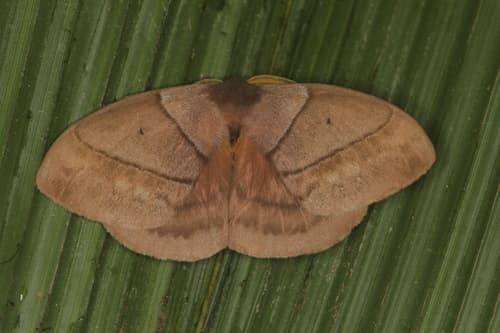
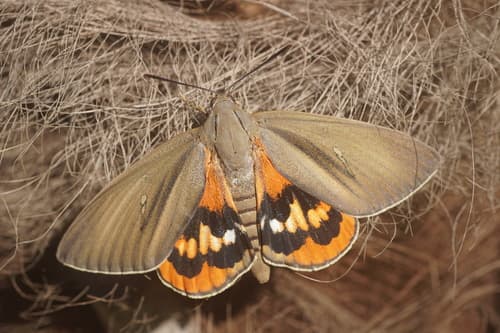
Identification TipsKey identification features include the uniform tan-brown forewings and the distinctive hindwing pattern of orange, black, and white/yellow patches. The body is often pale or whitish, contrasting with the forewings.
Description
This moth has plain, dull tan-brown forewings that cover the body at rest, and striking hindwings that are revealed in flight or when disturbed. The hindwings feature a broad orange basal area, a central black band with prominent white or yellow patches, and an orange outer margin.