Paulownia Bagworm Moth
Common NamePaulownia Bagworm Moth
Scientific NameClania variegata
FamilyPsychidae
SubfamilyOiketicinae
Wingspan (mm)30
Wing Patternstriped
Primary Colorsbrown, tan
HabitatForests, orchards, urban areas, gardens, and cultivated lands where host plants are present.
Geographic RangeEast Asia (China, Japan, Korea, Taiwan) and Southeast Asia.
Host PlantsPaulownia tomentosa, Camellia sinensis, Citrus, Eucalyptus, Acacia
Flight PeriodMay to August
Flight Stylefluttering
Conservation Statusleast-concern
Lifecycle NotesThe larvae construct a characteristic silken bag covered with plant debris, which they carry as they feed. Females are apterous (wingless) and remain inside their pupal case within the bag, emitting pheromones to attract winged males.
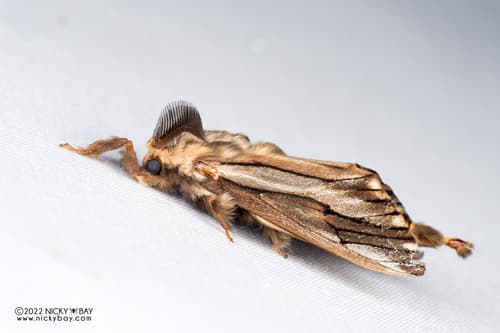
Identification TipsMales are identified by their distinctive striped brown wings and large feathery antennae. The presence of the larval bags, resembling small cones or tubes made of silk and plant fragments, on Paulownia or other broadleaf trees is a key indicator.
Description
The male Paulownia Bagworm Moth has a robust, hairy, light brown body and prominent bipectinate (feathery) antennae. Its forewings are a mottled brown with distinct dark longitudinal stripes along the veins.