Persea Leaf Miner Moth
Common NamePersea Leaf Miner Moth
Scientific NamePhyllocnistis hyperpersea
FamilyGracillariidae
SubfamilyPhyllocnistinae
Wingspan (mm)4
Wing Patternstriped
Primary Colorssilver, white, brown, black
HabitatOrchards, gardens, and natural areas where host plants (Persea species) are present.
Geographic RangeNative to the Neotropics (Central and South America), introduced to other regions where Persea is cultivated, such as Florida and California in the USA.
Host PlantsPersea americana (avocado), Persea borbonia (redbay), Persea palustris (swampbay)
Flight PeriodMultiple generations per year, active year-round in warm climates, peaking in warmer months.
Flight Stylefluttering
Conservation Statusleast-concern
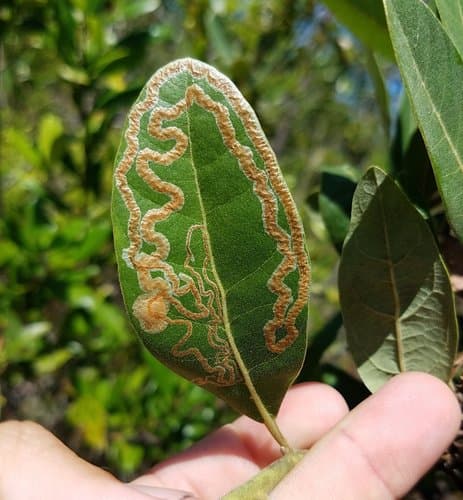
Lifecycle NotesEggs are laid on young leaves. Larvae hatch and tunnel within the epidermal layer of the leaf, creating the distinctive serpentine mines. Pupation occurs within the mine, often at the leaf margin, before the adult moth emerges.
Identification TipsThe most reliable identification feature is the highly tortuous, silvery-white to brownish serpentine leaf mine found on the upper or lower surface of Persea leaves. Adult moths are very small, silvery, with a dark apical spot and often a tuft of scales on the head.
Description
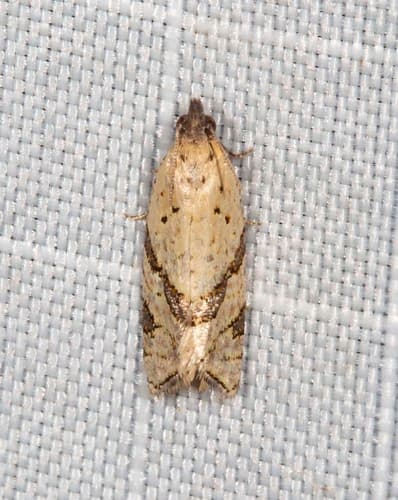
The adult moth is tiny, silvery-white with intricate dark brown or black markings and often a dark spot near the wing apex. The image displays the characteristic serpentine leaf mines created by its larvae on a green Persea leaf, appearing as raised, winding, pale brown trails.