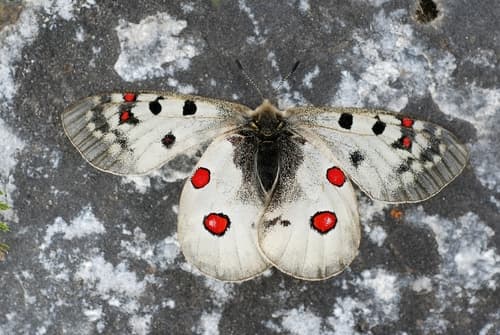
Phoebus Apollo
Common NamePhoebus Apollo
Scientific NameParnassius phoebus
FamilyPapilionidae
SubfamilyParnassiinae
Wingspan (mm)50
Wing Patternspotted
Primary Colorswhite, red, black
HabitatAlpine meadows, rocky slopes, subalpine zones, open woodlands
Geographic RangeHolarctic: Mountains of Europe (Alps, Pyrenees, Carpathians), Asia (Siberia, Central Asia), and North America (Rocky Mountains, Alaska)
Host PlantsSedum album, Sedum rosea, Saxifraga aizoides, Saxifraga oppositifolia
Flight PeriodJuly to August
Conservation Statusleast-concern
Lifecycle NotesOverwinters as an egg or a young larva. Larvae are dark with orange spots and feed on stonecrops and saxifrages. Pupation occurs in a loose cocoon on the ground.
Identification TipsDistinguished by its largely white, somewhat translucent wings, large red-ringed ocelli on the hindwings, and black spots on the forewings. The body is typically dark and hairy.
Description
A medium-sized butterfly with translucent white wings, adorned with prominent red ocelli (eyespots) ringed in black on the hindwings, and various black spots on the forewings.