Pickerelweed Borer Moth
Common NamePickerelweed Borer Moth
Scientific NameBellura obliqua
FamilyNoctuidae
SubfamilyNoctuinae
Wingspan (mm)30
Primary Colorsbrown, dark brown
HabitatWetlands, marshes, ponds, and slow-moving water bodies where host plants grow
Geographic RangeEastern North America, from Nova Scotia to Florida, west to Manitoba, Nebraska, and Texas
Host PlantsPontederia cordata (Pickerelweed), Eichhornia crassipes (Water Hyacinth), Sagittaria (Arrowhead)
Flight PeriodMay to September (north), March to November (south)
Conservation Statusleast-concern
Lifecycle NotesLarvae are borers, feeding internally within the stems of aquatic plants like pickerelweed. Pupation typically occurs within the host plant stem or in the surrounding soil.
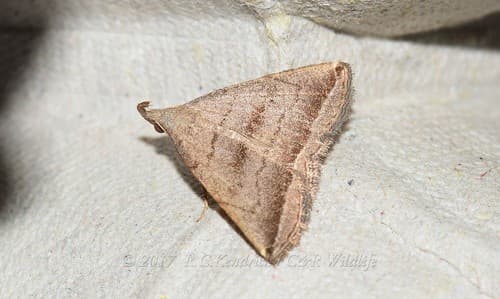
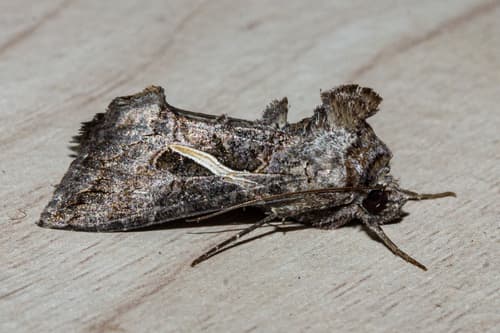
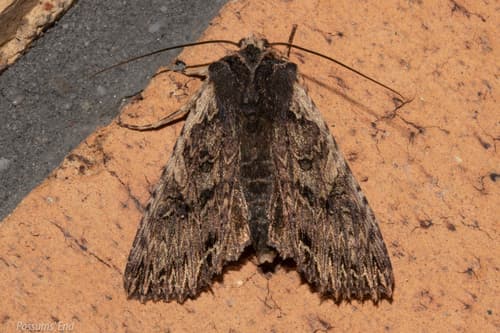
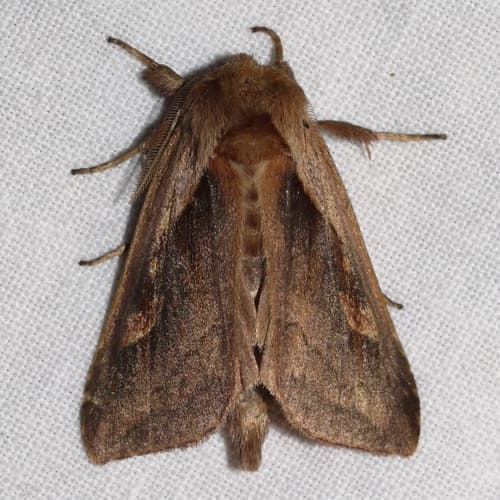
Identification TipsLook for its mottled brown coloration and robust build, especially in wetland habitats. The association with pickerelweed and other aquatic plants is a key indicator. The specific wing markings, though subtle, can help distinguish it from similar borer moths.
Description
A robust, medium-sized moth with mottled brown forewings, often featuring darker brown patches along the costa and termen, and a faint, pale reniform spot. The body is hairy and matches the brown coloration of the wings.