Pipevine Swallowtail
Common NamePipevine Swallowtail
Scientific NameBattus philenor
FamilyPapilionidae
SubfamilyPapilioninae
Wingspan (mm)90
Wing Patterniridescent
Primary Colorsblack, blue, green
HabitatOpen woodlands, fields, meadows, gardens
Geographic RangeEastern and southwestern United States, Mexico, Central America
Host PlantsAristolochia serpentaria, Aristolochia tomentosa, Aristolochia macrophylla
Flight PeriodMarch to November (multiple broods)
Flight Stylegliding
Conservation Statusleast-concern
Lifecycle NotesLarvae are dark, velvety, and covered in fleshy tubercles, feeding exclusively on toxic *Aristolochia* species, which makes them unpalatable to predators. Pupae are cryptic, resembling dead leaves or twigs.
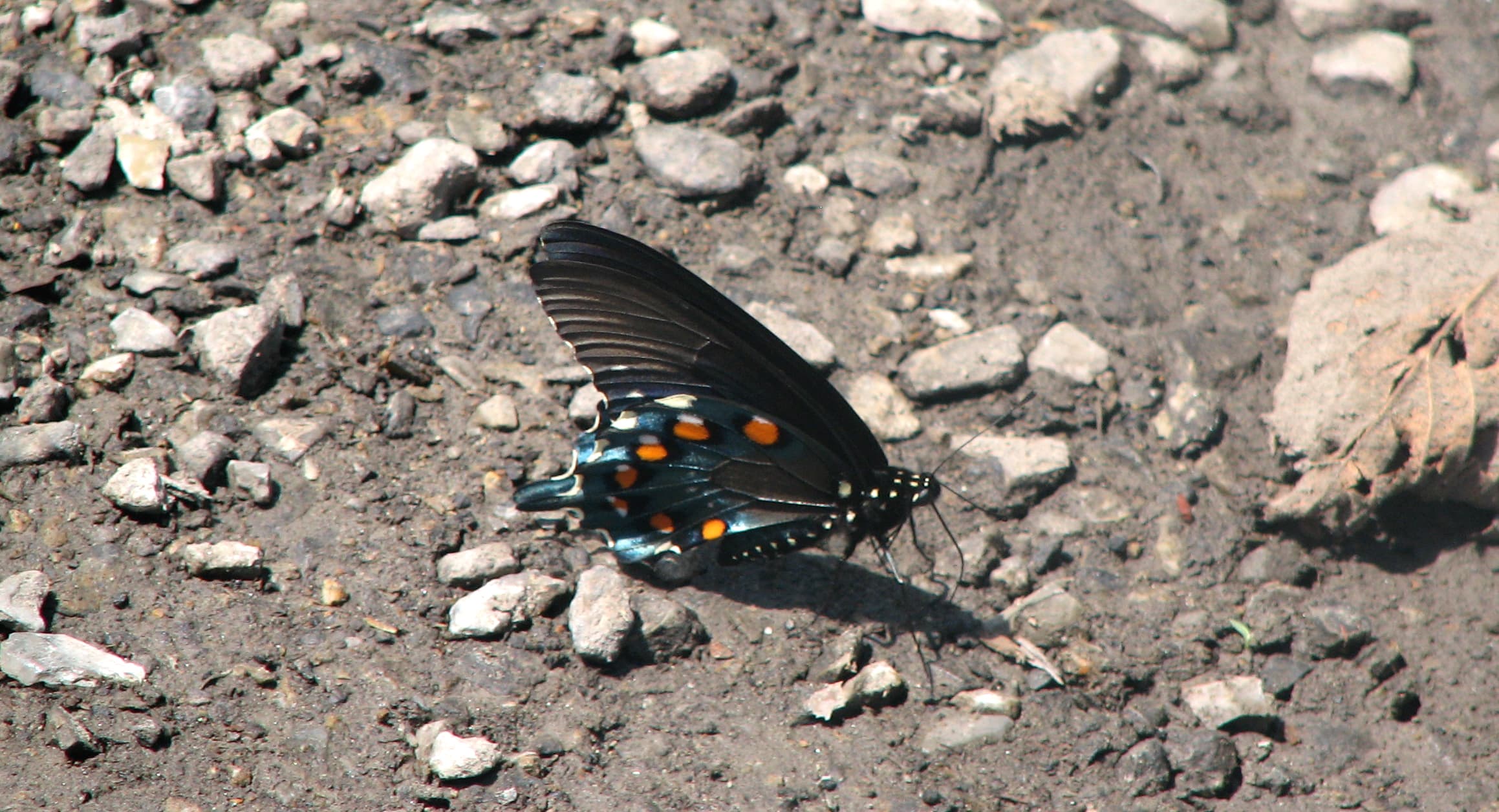
Identification TipsDistinguished from similar dark swallowtails by the iridescent blue-green sheen on the dorsal hindwings and a single row of bright orange spots on the ventral hindwings. The tails are also a good indicator.
Description
A large, black swallowtail with iridescent blue-green hindwings on the dorsal side and a distinctive row of bright orange spots on the ventral hindwings. It possesses prominent tails on its hindwings.