Pleasant Hornet Moth
Common NamePleasant Hornet Moth
Scientific NameSyntomeida epilais
FamilyErebidae
SubfamilyArctiinae
Wingspan (mm)35
Primary Colorsblack, yellow, orange, white, blue
HabitatGardens, parks, open woodlands, disturbed areas, especially where Oleander is present
Geographic RangeSoutheastern United States, Caribbean, Mexico, Central America, parts of South America
Host PlantsNerium oleander, Allamanda
Flight PeriodYear-round in tropical regions; multiple broods in warmer months elsewhere
Conservation Statusleast-concern
Lifecycle NotesLarvae, known as Oleander Caterpillars, are brightly colored (orange with black spots and tufts of hair) and feed gregariously on Oleander leaves. They pupate in silken cocoons.
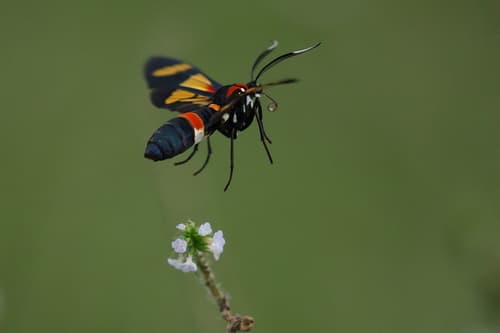
Identification TipsKey features include its wasp-like appearance, transparent wings with black veins and yellow/orange basal markings, iridescent blue-black body with a distinct orange abdominal band, and white spots on the thorax. Often found near Oleander plants.
Description
This moth mimics a wasp, featuring a slender, iridescent blue-black body with a prominent orange band on the abdomen and white spots on the thorax. Its wings are largely transparent with black veins and yellow/orange markings near the base.