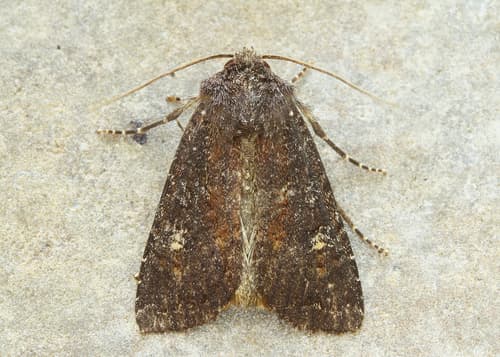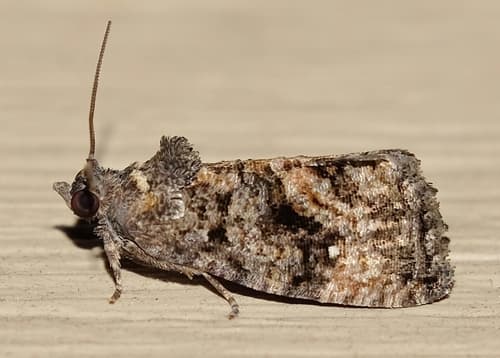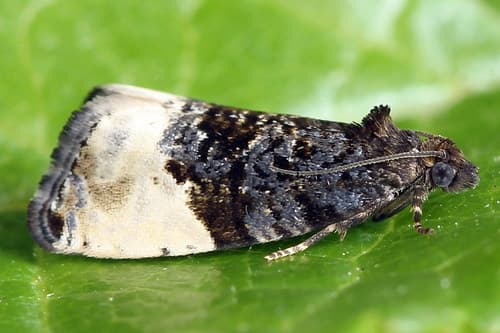
Plum Tortrix
Common NamePlum Tortrix
Scientific NameHedya pruniana
FamilyTortricidae
SubfamilyOlethreutinae
Wingspan (mm)17.5
Primary Colorsdark brown, black, cream, grey
HabitatOrchards, gardens, hedgerows, woodlands, parks
Geographic RangeEurope, North Africa, parts of Asia (e.g., Siberia, China, Japan), introduced to North America
Host PlantsPrunus (plum, cherry, sloe), Crataegus (hawthorn), Malus (apple), Pyrus (pear), Betula (birch)
Flight PeriodMay to July
Flight Stylefluttering
Conservation Statusleast-concern
Lifecycle NotesLarvae feed on the leaves and buds of various fruit trees and shrubs, often spinning leaves together or boring into fruit. They typically overwinter as larvae in bark crevices or leaf litter.
Identification TipsKey features include the dark forewing with a large, irregular pale cream or white patch on the tornus, which often contains darker streaks or spots. The moth rests with its wings folded, giving it a somewhat triangular profile.
Description
A small moth characterized by its dark, mottled forewings, which feature a prominent, irregular cream to white patch on the tornus (outer rear part of the wing). The head and thorax are dark, matching the basal wing coloration.