Polyphemus Moth
Common NamePolyphemus Moth
Scientific NameAntheraea polyphemus
FamilySaturniidae
SubfamilySaturniinae
Wingspan (mm)100
Wing Patterneyespot
Primary Colorsbrown, reddish-brown, black, yellow, blue
HabitatDeciduous forests, woodlands, orchards, suburban areas
Geographic RangeNorth America (from southern Canada through the United States to Mexico)
Host Plantsoak, maple, birch, willow, elm, rose, fruit trees
Flight PeriodMay to July (northern regions, one brood); April to September (southern regions, two or three broods)
Conservation Statusleast-concern
Lifecycle NotesLarvae are bright green with diagonal yellow stripes and red spots, feeding on various deciduous trees. They pupate in a silk cocoon wrapped in leaves, often falling to the ground. Adults emerge without functional mouthparts and do not feed, living only to mate and lay eggs.
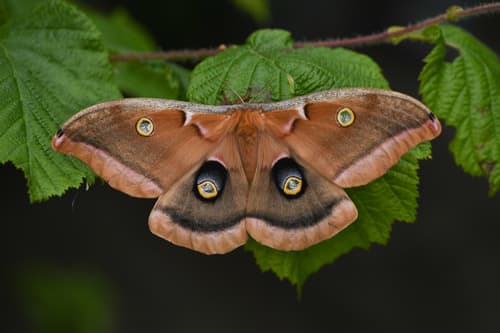
Identification TipsEasily identified by its large size and the distinctive, large, black-ringed yellow and blue eyespots on its hindwings, which resemble the eye of the mythical cyclops Polyphemus.
Description
A large, robust moth with wings typically reddish-brown to brownish-tan, featuring a prominent, black-ringed yellow and blue eyespot on each hindwing, and smaller, similar eyespots on the forewings.