Pseudabietis Tussock Moth
Common NamePseudabietis Tussock Moth
Scientific NameCalliteara pseudabietis
FamilyErebidae
SubfamilyLymantriinae
Wingspan (mm)40
Primary Colorswhite, grey, black
HabitatConiferous forests, mixed forests
Geographic RangeEastern Asia (e.g., Japan, Korea, China, Russian Far East)
Host PlantsAbies, Picea, Larix
Flight PeriodJuly to August
Flight Stylefluttering
Conservation Statusleast-concern
Lifecycle NotesLarvae are tussock caterpillars, typically hairy with prominent tufts, feeding on the needles of various conifers. Pupation occurs in a cocoon, often attached to host plants.
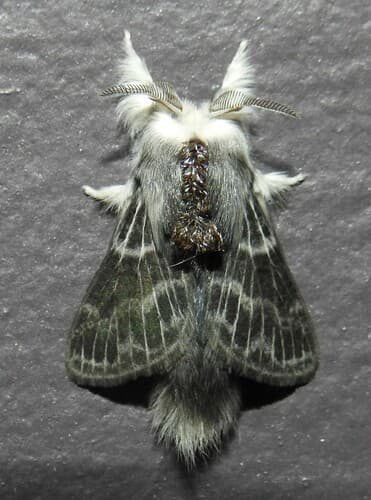
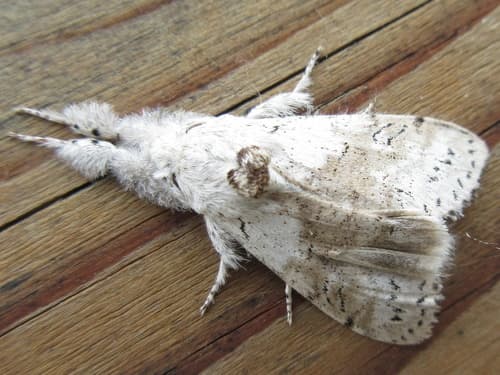
Identification TipsDistinguished by its pale, speckled greyish-white forewings and hairy body, often found in coniferous forest environments. The specific pattern of dark markings on the forewings can help differentiate it from similar Calliteara species.
Description
A medium-sized, robust moth with a very hairy, white to pale grey body. Its forewings are mottled with fine black speckles and irregular dark markings, providing excellent camouflage.