Ridings' Forester
Common NameRidings' Forester
Scientific NameAlypia ridingsii
FamilyErebidae
SubfamilyArctiinae
Wingspan (mm)30
Wing Patternspotted
Primary Colorsblack, white, orange
HabitatOpen woodlands, grasslands, prairies, sagebrush steppe
Geographic RangeWestern North America (Rocky Mountains, Great Plains, Southwest, Pacific Northwest)
Host PlantsOenothera caespitosa, Oenothera spp., Gaura spp.
Flight PeriodMay to July
Flight Styledarting
Conservation Statusleast-concern
Lifecycle NotesEggs are laid on host plants. Larvae are black with yellow bands and white spots, covered in short hairs, and pupate in the soil. Adults are diurnal.
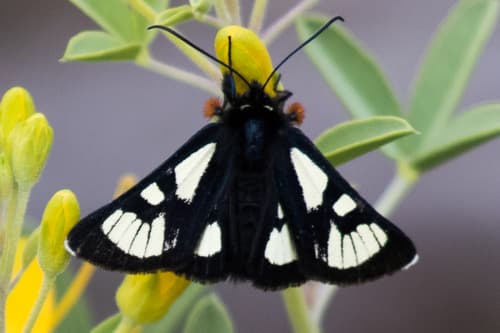
Identification TipsLook for the striking black and white wing pattern, the bright orange tufts on the thorax, and its butterfly-like diurnal flight. The specific arrangement of white spots on the forewings and hindwings is characteristic.
Description
A medium-sized, day-flying moth with velvety black wings featuring prominent white or cream-colored patches. It has distinctive orange tufts on its thorax and slightly clubbed antennae.