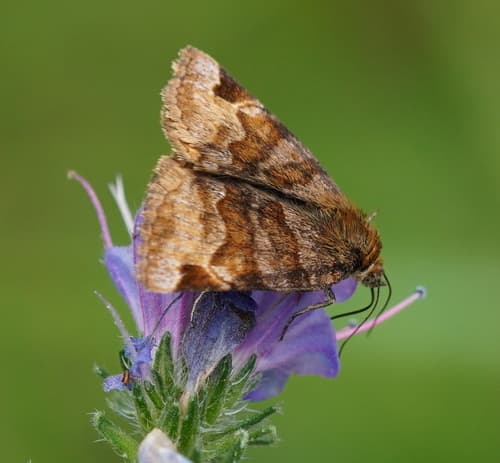
Roadside Sallow
Common NameRoadside Sallow
Scientific NameEupsilia devia
FamilyNoctuidae
SubfamilyNoctuinae
Wingspan (mm)38.5
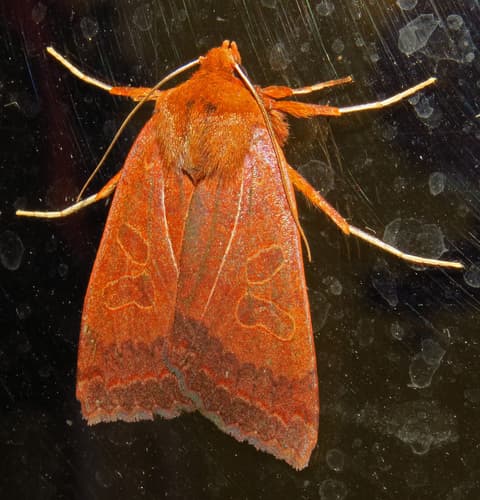
Primary Colorsrusty orange, reddish-brown
HabitatDeciduous forests, woodlands, mixed forests
Geographic RangeEastern North America, from Nova Scotia south to Florida, west to Texas and Manitoba
Host Plantsmaple (Acer), oak (Quercus), birch (Betula), willow (Salix), cherry (Prunus)
Flight PeriodLate fall (September-November), overwinters as adult, reappears in early spring (March-April)
Conservation Statusleast-concern
Lifecycle NotesLarvae feed on the leaves of various deciduous trees and shrubs in spring and early summer. They pupate in the soil, and adults emerge in late fall, overwintering as adults before laying eggs in the spring.
Identification TipsKey features include its rusty orange to reddish-brown coloration, the distinct lighter-outlined reniform and orbicular spots, and the darker, wavy subterminal band on the forewings. Its unusual flight period, active in late fall and early spring after overwintering, is also a strong identifier.
Description
This moth has a robust, furry body and forewings that are a rich rusty orange to reddish-brown. The forewings feature prominent, lighter-outlined reniform and orbicular spots, and a darker, wavy subterminal band.