Ross' Tussock Moth
Common NameRoss' Tussock Moth
Scientific NameOrgyia rossii
FamilyErebidae
SubfamilyLymantriinae
Wingspan (mm)30
Wing Patterncryptic
Primary Colorsgrey, brown, white
HabitatBoreal forests, subarctic regions, tundra edges
Geographic RangeNorthern Europe (Fennoscandia), Russia, Siberia, North America (Alaska, Canada)
Host PlantsLarix, Betula, Salix, Vaccinium, Picea, Pinus
Flight PeriodJuly to August
Flight Stylefluttering
Conservation Statusleast-concern
Lifecycle NotesThe larvae are hairy caterpillars, often with prominent tufts of hair, feeding on various trees and shrubs. Pupation occurs in a cocoon often incorporating larval hairs. Females are flightless and sac-like, laying eggs on or near their cocoon.
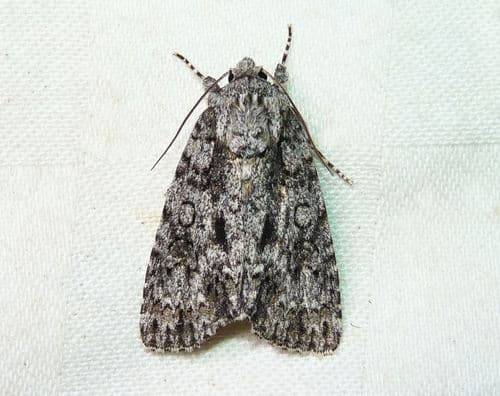
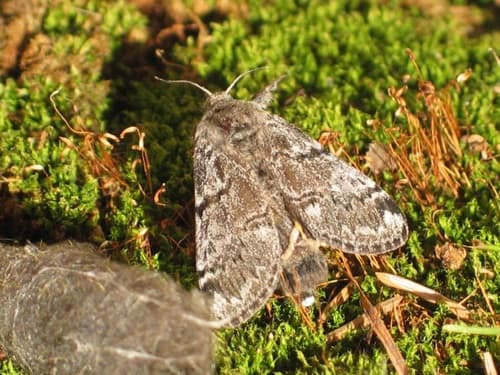
Identification TipsMales are identified by their cryptic grey-brown forewings with wavy markings and feathery antennae. Females are wingless and difficult to spot. The species is found in northern, cold regions.
Description
The male Ross' Tussock Moth has mottled grey-brown forewings with irregular white and darker markings, providing excellent camouflage against bark and moss. Its body is robust and furry.