Rosy Gypsy Moth
Common NameRosy Gypsy Moth
Scientific NameLymantria subrosea
FamilyErebidae
SubfamilyLymantriinae
Wingspan (mm)50
Wing Patternspotted
Primary Colorswhite, black, pink
HabitatConiferous and mixed forests, taiga, bogs
Geographic RangeNorthern Eurasia (Europe, Siberia, Mongolia, China, Korea, Japan)
Host PlantsPicea, Pinus, Larix, Abies, Betula, Salix, Vaccinium
Flight PeriodJuly to August
Flight Stylefluttering
Conservation Statusleast-concern
Lifecycle NotesEggs are laid in masses, hatching into hairy caterpillars that feed on various trees and shrubs. Larvae pupate in cocoons before emerging as nocturnal adult moths.
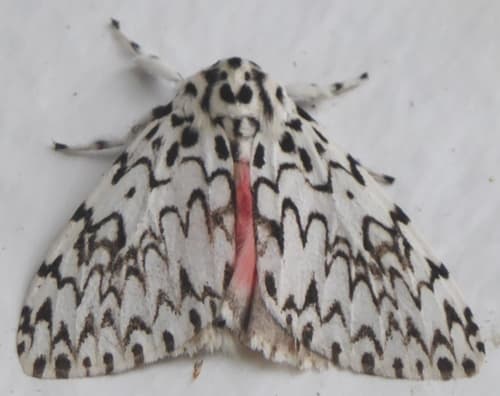
Identification TipsKey features include the white/grey forewings with prominent black wavy patterns, the distinctive rosy-pink patch on the thorax, and the black-spotted white head. Males have feathery antennae.
Description
A medium-sized moth with white or pale grey forewings marked with distinct black wavy lines and spots. Its thorax features a striking rosy-pink patch, contrasting with its black-spotted white head.