Rustic Quaker
Common NameRustic Quaker
Scientific NameCerastis rubricosa
FamilyNoctuidae
SubfamilyHadeninae
Wingspan (mm)32
Primary Colorsbrown, reddish-brown, grey
HabitatWoodlands, gardens, hedgerows, scrubland
Geographic RangeEurope, North Africa, parts of Asia
Host Plantswillow, sallow, dock, primrose, honeysuckle, various herbaceous plants
Flight PeriodMarch to May
Flight Stylefluttering
Conservation Statusleast-concern
Lifecycle NotesThe moth overwinters as a pupa in the soil. Adults emerge in early spring to lay eggs. Larvae are polyphagous, feeding on a variety of low-growing plants and shrubs during the summer before pupating.
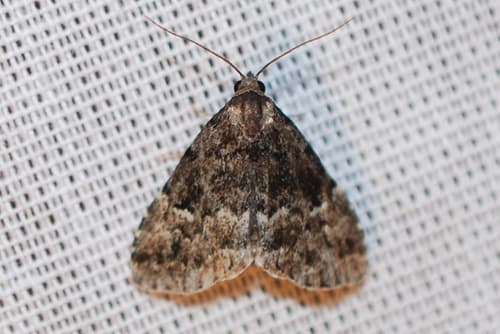
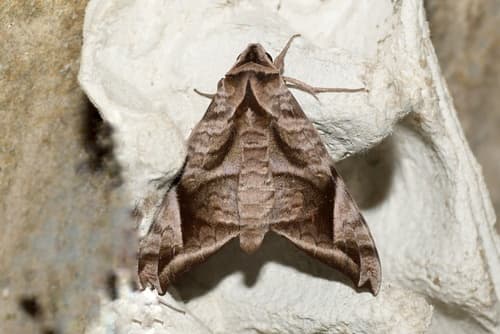
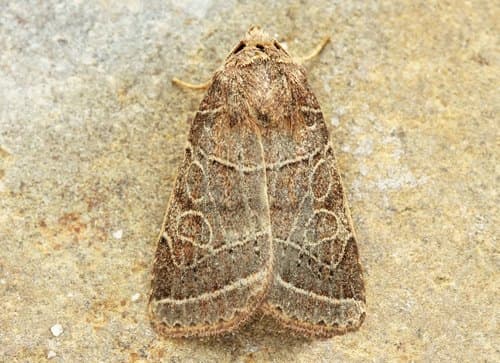
Identification TipsLook for the characteristic reddish-brown to purplish-brown forewings with clearly defined, pale-ringed kidney (reniform) and eye (orbicular) spots. Its early spring flight period is also a key identifier.
Description
A medium-sized moth with forewings that vary from reddish-brown to grey-brown, often with a purplish tinge. It features distinct pale-outlined reniform and orbicular stigmata and a pale, wavy subterminal line.