Rusty Tussock Moth
Common NameRusty Tussock Moth
Scientific NameOrgyia antiqua
FamilyErebidae
SubfamilyLymantriinae
Wingspan (mm)30
Primary Colorsbrown, dark brown, white
HabitatWoodlands, parks, gardens, heathland, scrubland
Geographic RangePalearctic region (Europe, Asia, North Africa), introduced to North America
Host Plantsbirch, willow, oak, hawthorn, apple, cherry, larch, spruce
Flight PeriodJuly to October
Flight Styledarting
Conservation Statusleast-concern
Lifecycle NotesEggs are laid in a mass on the female's cocoon. Larvae are hairy caterpillars with prominent tussocks of hair. They pupate in a silken cocoon, from which the winged male and flightless female emerge.
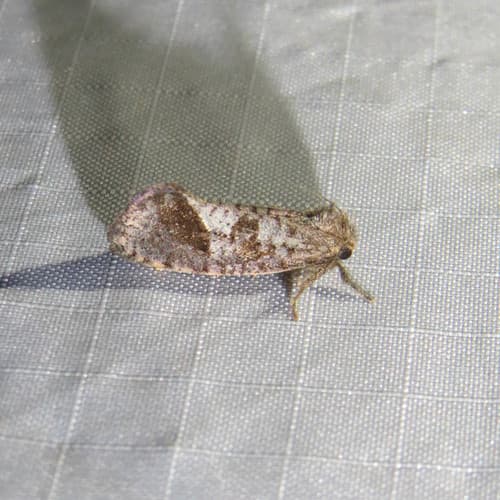
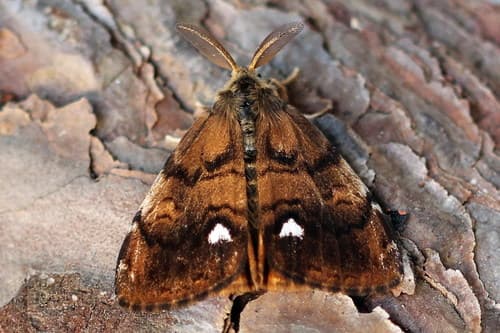
Identification TipsMales are easily identified by their day-flying habit, reddish-brown forewings with dark bands, and the distinct white spot on each forewing, along with their feathery antennae. Females are wingless and remain on their cocoons.
Description
The male Rusty Tussock Moth has reddish-brown to dark brown forewings with darker wavy bands and a prominent white discal spot on each. Its body is hairy, and it possesses distinctive feathery antennae.