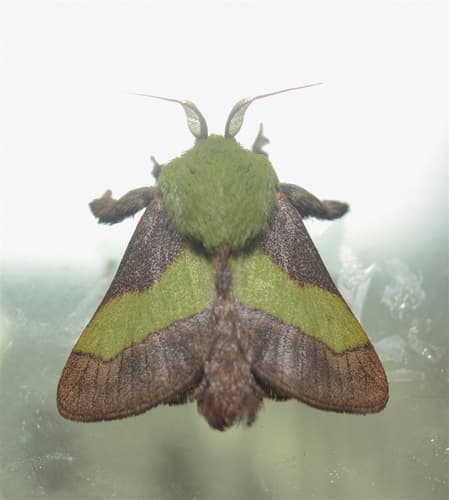
Smaller Parasa
Common NameSmaller Parasa
Scientific NameParasa minima
FamilyLimacodidae
SubfamilyLimacodinae
Wingspan (mm)22
Wing Patternstriped
Primary Colorsgreen, brown
HabitatDeciduous forests, woodlands, suburban areas
Geographic RangeEastern North America (from southern Canada to Florida and west to Texas)
Host Plantsoak, maple, cherry, apple, birch, willow, elm, sycamore, dogwood, hickory, chestnut
Flight PeriodMay to September
Flight Stylefluttering
Conservation Statusleast-concern
Lifecycle NotesLarvae are slug-like, flattened, and often brightly colored, sometimes possessing stinging hairs. They feed on the underside of leaves and pupate in a tough, oval cocoon.
Identification TipsDistinguished by its bright green thorax and a distinct, relatively narrow green band on the forewings, contrasting with the dark brown margins. Males have feathery (bipectinate) antennae.
Description
A small moth characterized by a bright green, furry thorax and a prominent green band across the forewings, bordered by dark brown.