Sycamore Tussock Moth
Common NameSycamore Tussock Moth
Scientific NameHalysidota harrisii
FamilyErebidae
SubfamilyArctiinae
Wingspan (mm)40
Primary Colorspale yellow, cream, brown
HabitatDeciduous forests, woodlands, parks, suburban areas
Geographic RangeEastern North America
Host Plantssycamore, alder, birch, elm, oak, willow
Flight PeriodMay to September
Flight Stylefluttering
Conservation Statusleast-concern
Lifecycle NotesThe caterpillar feeds on host tree leaves, then pupates in a cocoon often incorporating its own hairs, overwintering as a pupa. The adult moth emerges in the spring or summer.
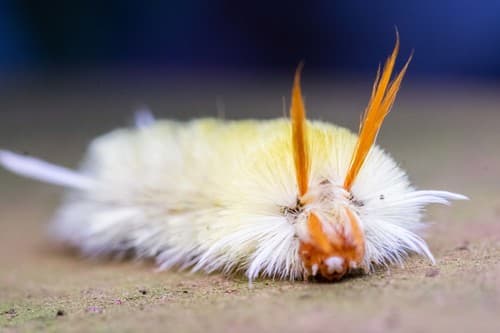
Identification TipsThe caterpillar is easily identified by its dense pale yellow to white fur, bright orange head, and distinctive long orange and white hair tufts at both ends. The adult moth has translucent, pale yellow wings with a network of brown veins.
Description
The image displays a fluffy, pale yellow caterpillar with a prominent orange head and two long, feathery orange tufts extending forward, complemented by white tufts at the rear.