Tamarind Owl
Common NameTamarind Owl
Scientific NameCaligo idomeneus
FamilyNymphalidae
SubfamilyBrassolinae
Wingspan (mm)120
Primary Colorsbrown, tan, black, cream
HabitatTropical and subtropical rainforests, forest edges
Geographic RangeCentral America, South America (from Mexico to Brazil)
Host PlantsMusa (banana), Heliconia, Calathea, Euterpe
Flight PeriodYear-round in tropical regions, often crepuscular (dawn and dusk)
Conservation Statusleast-concern
Lifecycle NotesEggs are laid singly or in small clusters. Larvae are large, often green or brown with horn-like head projections and a forked tail. Pupae are cryptic, resembling dead leaves or twigs.
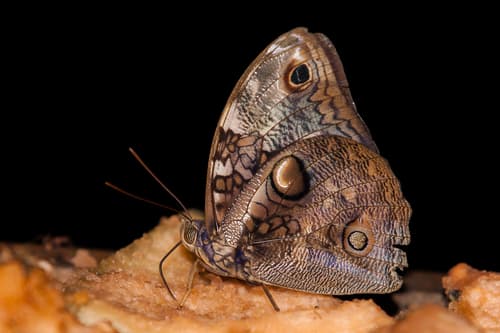
Identification TipsKey features include its large size, crepuscular flight activity, and the distinctive large, concentric eyespots on the underside of the wings, which resemble an owl's eyes.
Description
A large butterfly with a cryptic underside, featuring prominent, concentric eyespots on both forewings and hindwings, set against a mottled brown and tan background that mimics dead leaves.