Tetrio Sphinx
Common NameTetrio Sphinx
Scientific NamePseudosphinx tetrio
FamilySphingidae
SubfamilyMacroglossinae
Wingspan (mm)115
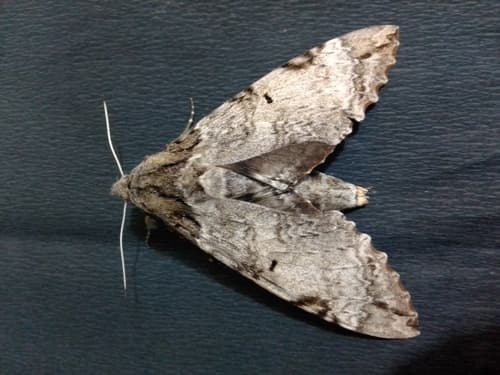
Wing Patterncryptic
Primary Colorsgrey, black, white
HabitatTropical and subtropical forests, gardens, disturbed areas
Geographic RangeSouthern United States (Florida, Texas), Central America, South America, Caribbean
Host PlantsPlumeria, Allamanda, Nerium oleander, Catharanthus roseus
Flight PeriodYear-round in tropical regions; multiple broods in warmer months in temperate zones
Conservation Statusleast-concern
Lifecycle NotesEggs are laid on host plants, hatching into distinctive yellow and black striped larvae with a red head. These 'frangipani worms' are voracious feeders before pupating in the soil, emerging as adult moths.
Identification TipsLook for the large size, the cryptic mottled grey and black forewing pattern, and the robust body typical of sphinx moths. The long, white antennae are also a good indicator. The larvae are unmistakable with their bright yellow and black stripes and red head.
Description
The Tetrio Sphinx is a large moth with long, narrow, pointed forewings featuring a mottled pattern of various shades of grey and black, providing excellent camouflage. Its robust body is covered in dense, greyish-brown hairs, and it possesses prominent white antennae.