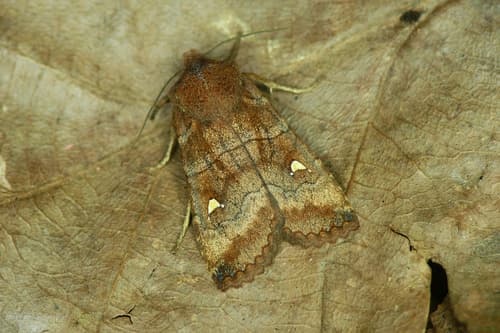
The Satellite
Common NameThe Satellite
Scientific NameEupsilia transversa
FamilyNoctuidae
SubfamilyXyleninae
Wingspan (mm)43
Wing Patterncryptic
Primary Colorsbrown, yellowish-brown, dark brown
HabitatWoodlands, forests, hedgerows, gardens
Geographic RangeEurope, North Africa, temperate Asia, North America
Host Plantsoak, willow, birch, elm, hawthorn, sallow
Flight PeriodSeptember to April (overwintering adult)
Flight Stylefluttering
Conservation Statusleast-concern
Lifecycle NotesAdults emerge in late summer/autumn and overwinter, becoming active on mild winter nights. Eggs are laid in spring, and larvae feed from April to June before pupating in the soil.
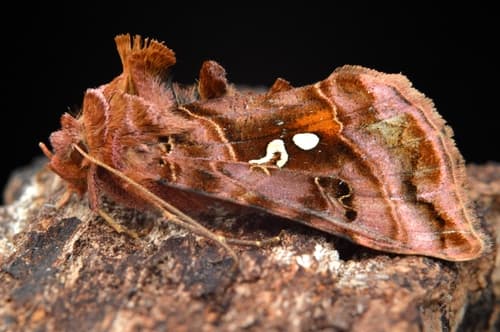
Identification TipsLook for the mottled brown forewings with two pale, often triangular or kidney-shaped stigmata, and crucially, a small, pale 'satellite' spot near the apex of the forewing. Its flight period during late autumn, winter, and early spring is also a key identifier.
Description
A medium-sized, robust moth with mottled reddish-brown to greyish-brown forewings, featuring two prominent pale stigmata and a distinctive small, pale, often yellowish 'satellite' spot near the apex of each forewing.