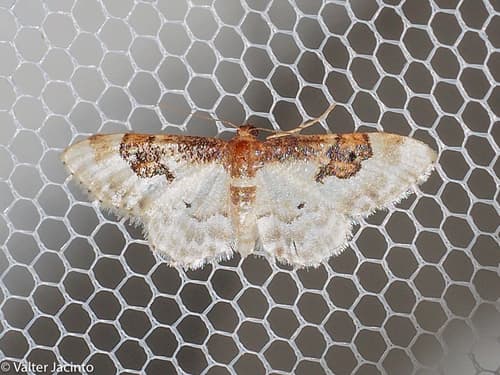
Tooth-striped Wave
Common NameTooth-striped Wave
Scientific NameIdaea mustelata
FamilyGeometridae
SubfamilySterrhinae
Wingspan (mm)20
Wing Patterncryptic
Primary Colorswhite, brown, cream
HabitatDry grasslands, heathlands, open woodlands, scrubland, gardens
Geographic RangeWestern and Central Europe, extending eastwards
Host Plantsdandelion, hawkweeds, plantain, knotgrass
Flight PeriodMay to July (sometimes a partial second generation in August)
Flight Stylefluttering
Conservation Statusleast-concern
Lifecycle NotesLarvae are slender, twig-like loopers that feed on low-growing plants and overwinter. Pupation occurs in a loose cocoon on the ground or among leaf litter.
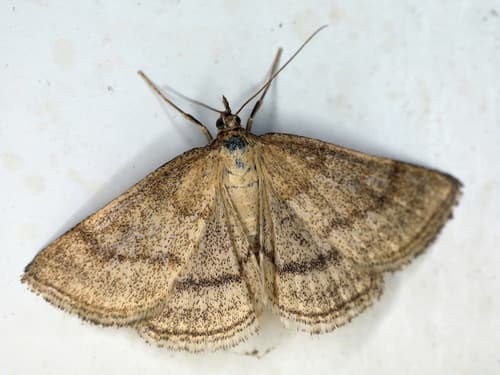
Identification TipsDistinguished by its pale ground color and the prominent, somewhat jagged dark brown central band on the forewings, which often has a 'toothed' appearance on its inner edge. Hindwings show faint wavy lines and a small discal spot.
Description
A small, pale moth with a whitish-cream ground color, featuring a distinctive broad, irregular dark brown band across the forewings and fainter, wavy brown lines on both forewings and hindwings.