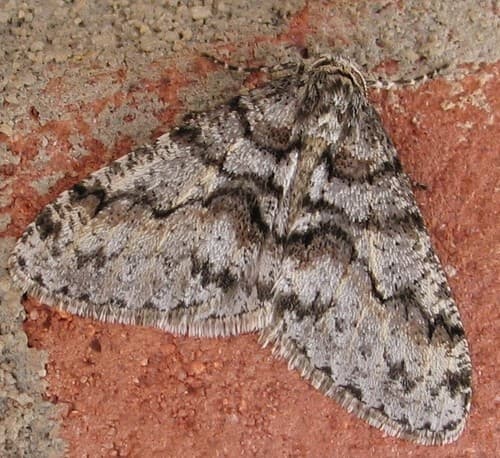
Toothed Phigalia Moth
Common NameToothed Phigalia Moth
Scientific NamePhigalia titea
FamilyGeometridae
SubfamilyEnnominae
Wingspan (mm)30
Wing Patterncryptic
Primary Colorsgrey, brown, white
HabitatDeciduous woodlands, forests, suburban areas with trees
Geographic RangeEastern North America, from Nova Scotia south to Florida and west to Texas and Manitoba
Host Plantsoak, maple, birch, elm, hickory, ash, cherry
Flight PeriodLate winter to early spring (February to April)
Flight Stylefluttering
Conservation Statusleast-concern
Lifecycle NotesLarvae are 'loopers' or inchworms, feeding on various deciduous tree leaves. They pupate in the soil over summer and fall, with adults emerging in late winter or early spring. Males are winged, while females are flightless with reduced wings.
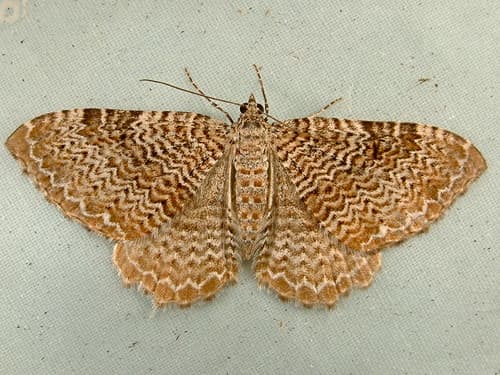
Identification TipsLook for the distinctive wavy, dark lines on the forewings and the scalloped hindwing margins. Males have feathery antennae. Its early flight period in late winter/early spring is also a key identifier, often being one of the first moths to emerge.
Description
This moth has a mottled appearance with shades of grey, brown, and white, featuring distinct wavy, dark lines across its forewings. The wing margins are often scalloped, contributing to its cryptic camouflage.