Tulip-tree Silkmoth
Common NameTulip-tree Silkmoth
Scientific NameCallosamia angulifera
FamilySaturniidae
SubfamilySaturniinae
Wingspan (mm)80
Primary Colorsbrown, orange, black, white
HabitatDeciduous forests, woodlands, suburban areas with host trees
Geographic RangeEastern North America, from southern New England south to Florida and west to Michigan and Mississippi
Host PlantsLiriodendron tulipifera (Tulip Tree), Magnolia spp.
Flight PeriodMay to July
Flight Stylefluttering
Conservation Statusleast-concern
Lifecycle NotesLarvae are green with yellow tubercles and feed on the leaves of host trees. They pupate in a silken cocoon attached to a twig, often resembling a dried leaf.
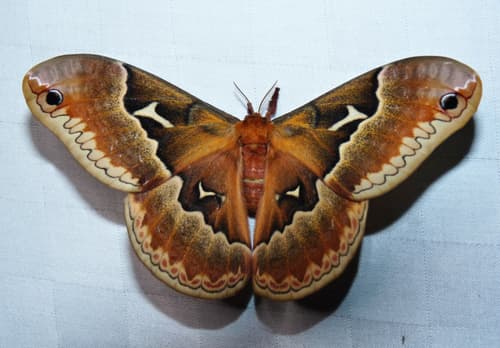
Identification TipsDistinguished from the closely related Promethea Silkmoth (*Callosamia promethea*) by its more angular white markings and the presence of eyespots on the forewings of both sexes (Promethea males are dark, females have eyespots but different markings).
Description
A large, robust moth with rich reddish-brown to orange-brown wings, featuring prominent black-ringed eyespots on the forewings and distinctive angular white markings on all wings.