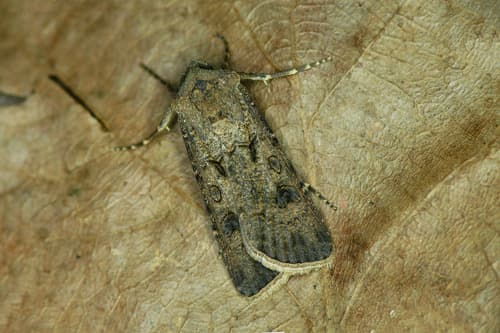
Turnip Moth
Common NameTurnip Moth
Scientific NameAgrotis segetum
FamilyNoctuidae
SubfamilyNoctuinae
Wingspan (mm)30
Wing Patterncryptic
Primary Colorsbrown, grey, black
HabitatAgricultural fields, gardens, grasslands, open woodlands
Geographic RangeEurope, Asia, Africa
Host Plantspotato, maize, cereals, brassicas, sugar beet, lettuce, carrot
Flight PeriodMay to October
Flight Stylefluttering
Conservation Statusleast-concern
Lifecycle NotesEggs are laid on host plants, hatching into larvae known as cutworms, which are nocturnal and feed on plant roots and stems, often severing young plants. Pupation occurs in the soil, from which the adult moths emerge.
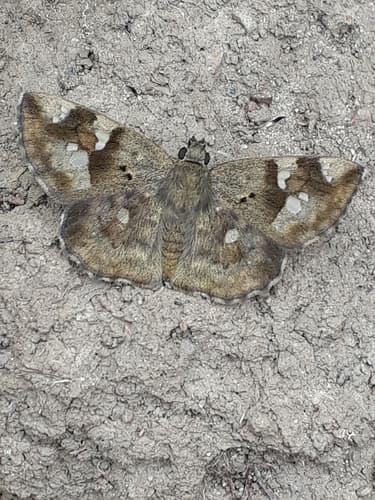
Identification TipsKey identification features include the overall grey-brown cryptic forewing pattern with distinct dark kidney-shaped (reniform) and circular (orbicular) stigmata, and a characteristic dark basal streak. The hindwings are typically whitish with a darker margin, though not visible in this image.
Description
The Turnip Moth has mottled grey-brown forewings with distinct dark orbicular and reniform stigmata, and a prominent dark streak extending from the base. Its robust body and cryptic coloration allow it to blend seamlessly with its surroundings.