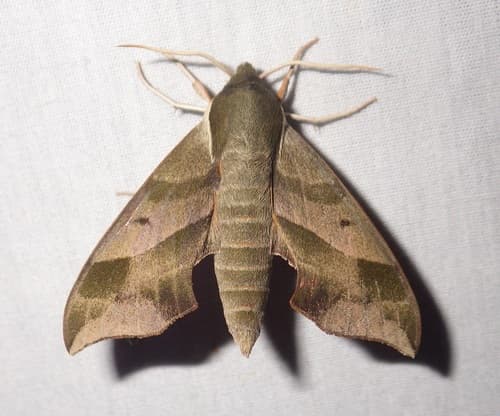
Virginia Creeper Sphinx
Common NameVirginia Creeper Sphinx
Scientific NameDarapsa myron
FamilySphingidae
SubfamilyMacroglossinae
Wingspan (mm)65
Wing Patterncryptic
Primary Colorsgreen, brown, tan
HabitatWoodlands, forest edges, suburban areas, gardens
Geographic RangeEastern North America, from Nova Scotia south to Florida, west to Texas and Manitoba
Host PlantsVirginia creeper, grape, peppervine
Flight PeriodMay to October
Conservation Statusleast-concern
Lifecycle NotesLarvae are green with a yellow lateral stripe and a horn at the rear, feeding on host plant leaves. They pupate in a loose cocoon in leaf litter or underground.
Identification TipsLook for the distinctive olive-green and brown mottled forewings, the robust body, and the slightly scalloped outer margin of the forewings. The lack of prominent eyespots distinguishes it from some other sphinx moths.
Description
This moth has a robust, olive-green body and forewings with irregular patches of darker green and brown, giving it a mottled, cryptic appearance. The hindwings are typically a dull reddish-brown.