Westermannia elliptica
Common NameWestermannia elliptica
Scientific NameWestermannia elliptica
FamilyEuteliidae
SubfamilyEuteliinae
Wingspan (mm)22
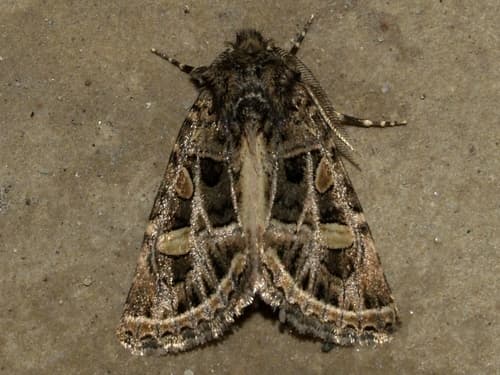
Primary Colorsdark brown, white, pale brown
HabitatTropical and subtropical forests, woodlands, and disturbed areas.
Geographic RangeWidespread in parts of Africa (e.g., South Africa, Eswatini, Mozambique, Zimbabwe, Kenya, Tanzania) and Asia (e.g., India, Sri Lanka, Southeast Asia).
Host PlantsTriumfetta
Flight PeriodMultiple broods throughout the year in tropical and subtropical regions.
Flight Stylefluttering
Conservation Statusleast-concern
Lifecycle NotesThe moth undergoes complete metamorphosis, starting as an egg, hatching into a caterpillar that feeds on host plants, then pupating in a cocoon before emerging as an adult moth.
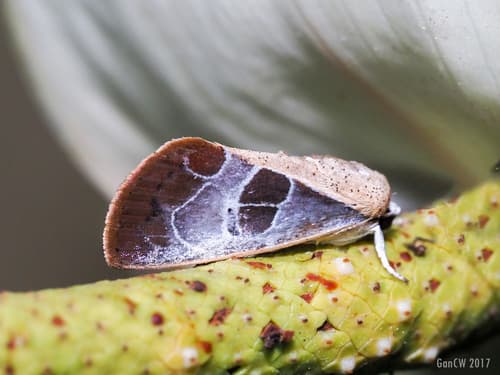
Identification TipsLook for the distinctive dark brown forewings with prominent, sharply defined white or pale grey elliptical and wavy markings, particularly the large discal spot. The overall wing shape and resting posture are also characteristic.
Description
This is a small moth with forewings that are predominantly dark brown to purplish-brown, strikingly marked with intricate white or pale grey elliptical and wavy patterns. Its head and thorax are a lighter pale brown.