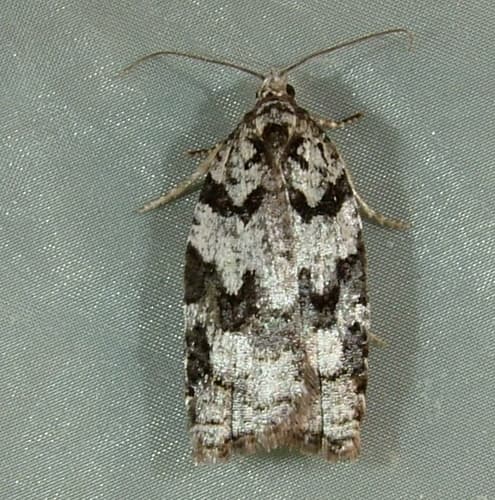
Western Black-headed Budworm
Common NameWestern Black-headed Budworm
Scientific NameAcleris gloverana
FamilyTortricidae
SubfamilyTortricinae
Wingspan (mm)20
Wing Patterncryptic
Primary Colorsgrey, black, white
HabitatConiferous forests
Geographic RangeWestern North America (British Columbia, Washington, Oregon, Idaho, Montana, California)
Host Plantswestern hemlock, Douglas-fir, grand fir, Sitka spruce
Flight PeriodAugust to October
Flight Stylefluttering
Conservation Statusleast-concern
Lifecycle NotesEggs are laid on conifer needles in the fall and overwinter. Larvae hatch in spring, feeding on new buds and needles, then pupate within silken shelters among the foliage. Adults emerge in late summer to early fall.
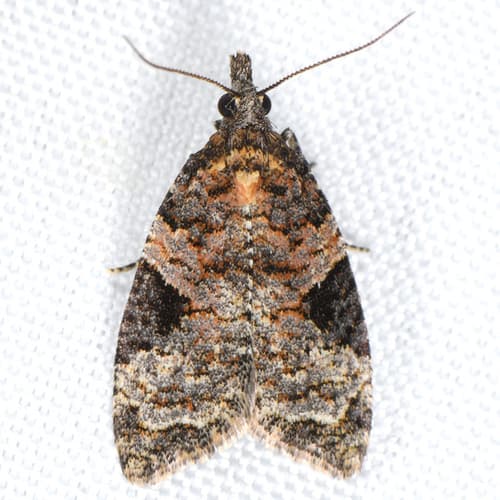
Identification TipsKey features include its small size and the distinctive mottled grey, black, and white forewing pattern, particularly the irregular dark band. It is primarily found in coniferous forests of western North America.
Description
A small moth with forewings displaying a complex, mottled pattern of silvery-white, dark grey, and black, often featuring an irregular dark band or patch across the middle.