Western Conifer Looper
Common NameWestern Conifer Looper
Scientific NameLambdina fiscellaria lugubrosa
FamilyGeometridae
SubfamilyEnnominae
Wingspan (mm)38
Primary Colorsbrown, reddish-brown, white, black
HabitatConiferous forests, mixed forests
Geographic RangeWestern North America (British Columbia south to California, east to Montana)
Host PlantsDouglas-fir, Western Hemlock, Grand Fir, other firs, spruces, pines
Flight PeriodAugust to October
Flight Stylefluttering
Conservation Statusleast-concern
Lifecycle NotesLarvae are 'loopers' or 'inchworms' that feed on the needles of various conifer trees. They pupate in the soil or duff, and adults emerge in late summer to fall.
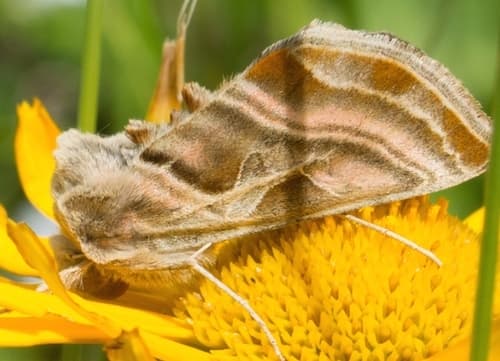
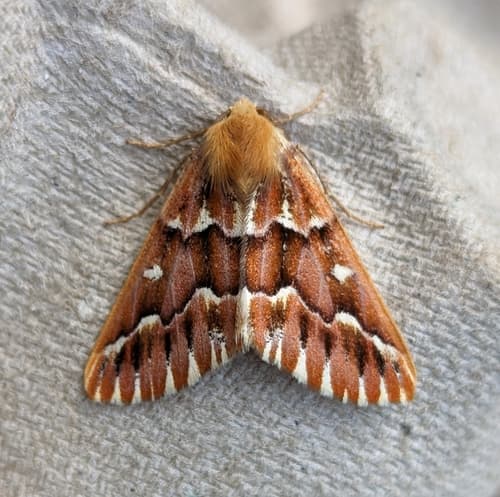
Identification TipsLook for the distinctive wavy white and dark brown bands on reddish-brown forewings, particularly the two prominent white bands. The fuzzy, light brown head and thorax are also characteristic.
Description
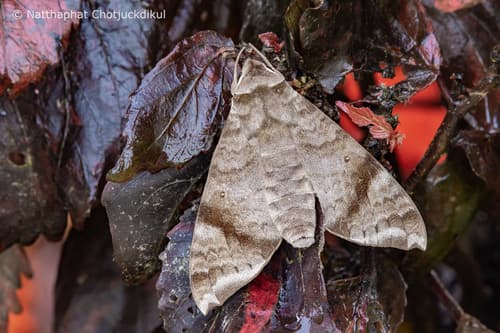
A medium-sized moth with mottled reddish-brown and dark brown wings, featuring prominent wavy white and black lines across the forewings, and a fuzzy, light brown thorax.