Western Eyed Sphinx
Common NameWestern Eyed Sphinx
Scientific NameSmerinthus cerisyi
FamilySphingidae
SubfamilySmerinthinae
Wingspan (mm)85
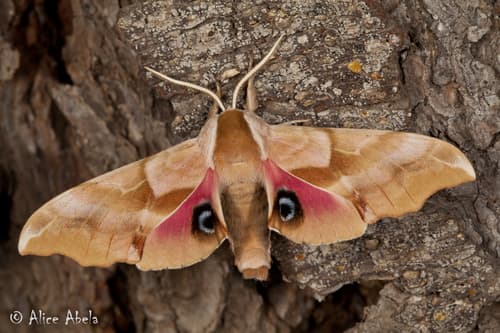
Primary Colorsbrown, tan, pink, blue, black
HabitatWoodlands, riparian areas, shrublands, often near water sources where host plants grow.
Geographic RangeWestern North America, from British Columbia south to California and east to the Great Plains.
Host Plantswillow, poplar, aspen, birch
Flight PeriodMay to August, often with two broods in warmer regions.
Conservation Statusleast-concern
Lifecycle NotesThe larvae are large green 'hornworms' with a prominent caudal horn, feeding on the leaves of various trees and shrubs. They pupate in an underground chamber, and adults are nocturnal, generally not feeding.
Identification TipsKey identification features include the large, distinct blue and black eyespots on the pink hindwings, which are revealed when the moth is disturbed. The forewings have a complex, wavy pattern of brown and tan shades.
Description
This moth displays mottled brown and tan forewings that provide excellent camouflage against tree bark. Its hindwings, typically concealed at rest, are bright pink with striking blue and black eyespots.