Western Furcula Moth
Common NameWestern Furcula Moth
Scientific NameFurcula scolopendrina
FamilyNotodontidae
SubfamilyNotodontinae
Wingspan (mm)38
Primary Colorslight grey, black, orange
HabitatDeciduous and mixed forests, woodlands, riparian areas
Geographic RangeWestern North America (British Columbia south to California, east to the Rocky Mountains)
Host PlantsPopulus spp. (poplar, aspen), Salix spp. (willow)
Flight PeriodMay to August
Flight Stylefluttering
Conservation Statusleast-concern
Lifecycle NotesLarvae are green with a saddle-like marking and a forked tail, feeding on host plant leaves. Pupation occurs in a cocoon, often overwintering as a pupa.
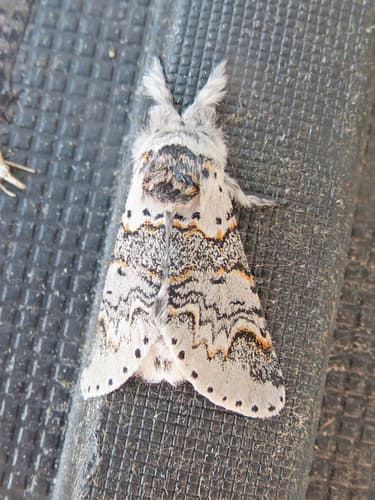
Identification TipsDistinguished by its pale grey forewings with wavy black and orange/brown markings, including a distinct row of black dots along the termen. The prominent furry palpi and tufted thorax are characteristic of the genus.
Description
A medium-sized moth with a fuzzy, light grey body and forewings. The forewings are pale grey or whitish with intricate, wavy black lines and patches, often accented with dull orange or brownish scales, and a row of small black dots along the outer margin.