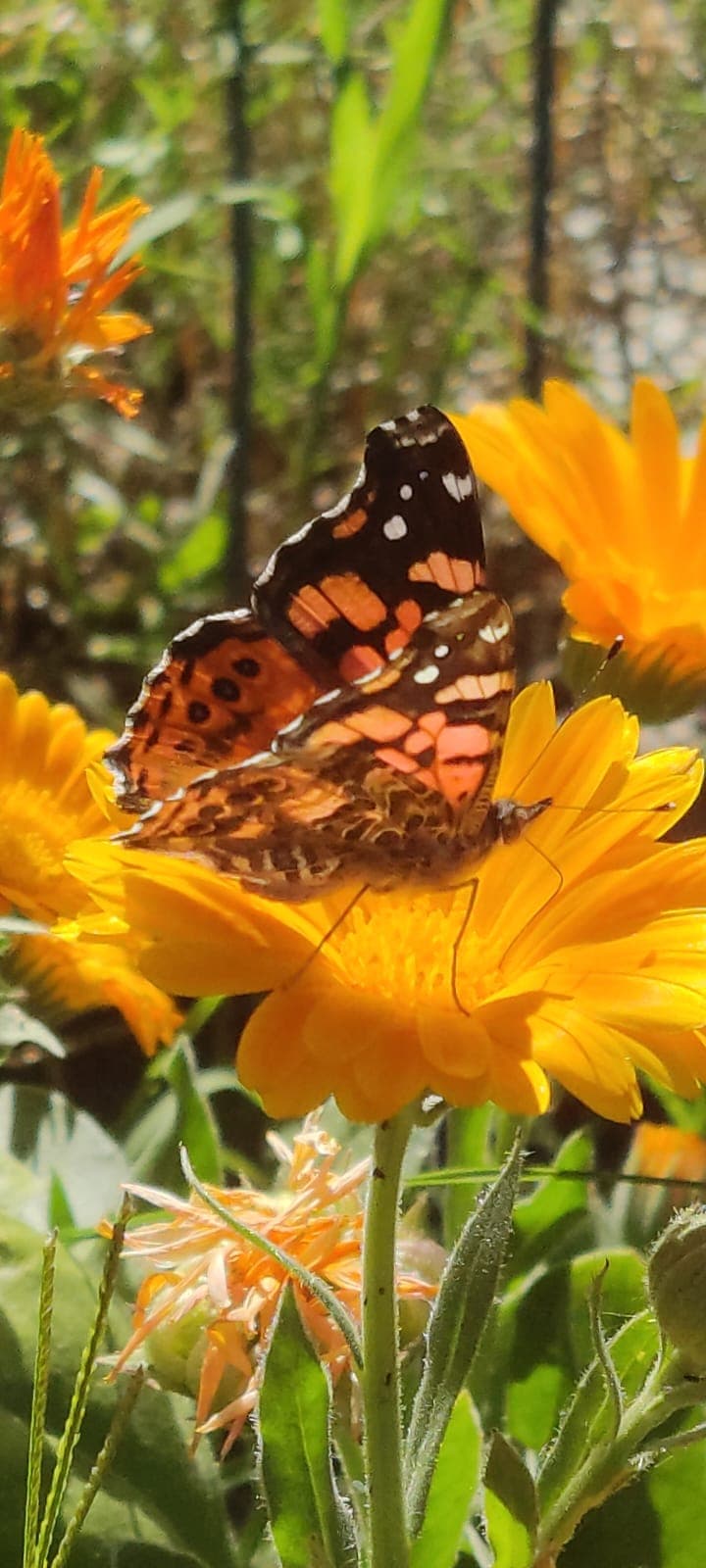
Western Painted Lady
Image: Kraket5904 (CC BY-SA 4.0)
Common NameWestern Painted Lady
Scientific NameVanessa carye
FamilyNymphalidae
SubfamilyNymphalinae
Wingspan (mm)50
Wing Patternspotted
Primary Colorsorange, black, white, brown
HabitatOpen fields, grasslands, gardens, disturbed areas, agricultural lands
Geographic RangeSouth America (Chile, Argentina, Peru, Bolivia, Ecuador, Colombia, Venezuela), Central America, and occasionally as a migrant to North America
Host Plantsthistles (Cirsium), mallows (Malva), various Asteraceae
Flight PeriodYear-round in warmer regions; multiple broods from spring to autumn in temperate zones
Conservation Statusleast-concern
Lifecycle NotesEggs are laid singly on host plants. Larvae are spiny, typically dark with yellow or orange markings, and feed on leaves. Pupae are chrysalides, often with metallic spots.
Identification TipsDistinguishable from the Painted Lady (*Vanessa cardui*) by the four prominent, often blue-centered, eyespots on the hindwing underside, which are typically larger and more distinct than those of *V. cardui*.
Description
A medium-sized butterfly with vibrant orange and black upperwings, featuring white spots on the forewing tips. The underside is a mottled brown and tan, providing camouflage, and typically displays four distinct eyespots on the hindwings.