Western Polyphemus Moth
Common NameWestern Polyphemus Moth
Scientific NameAntheraea polyphemus oculea
FamilySaturniidae
SubfamilySaturniinae
Wingspan (mm)100
Wing Patterneyespot
Primary Colorstan, brown, black, orange, blue
HabitatForests, woodlands, suburban areas, orchards
Geographic RangeWestern North America
Host Plantsoak, maple, birch, willow, fruit trees
Flight PeriodMay to July
Conservation Statusleast-concern
Lifecycle NotesUndergoes complete metamorphosis. Larvae are large, green caterpillars that feed on various broadleaf trees and shrubs. They pupate in a silk cocoon, often wrapped in leaves, overwintering before emerging as adults.
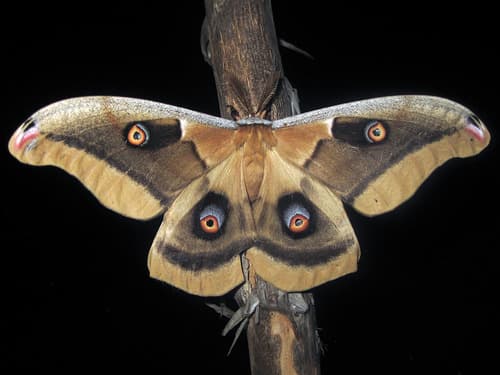
Identification TipsDistinguished by its large size and the striking, prominent eyespots on all four wings, which resemble the eyes of an owl. The overall tan-brown coloration with a dark band across the hindwings is also characteristic.
Description
A large, robust moth with wings predominantly tan to light brown, featuring prominent, multi-colored eyespots on both the forewings and hindwings. The eyespots are typically black, ringed with yellow, orange, and blue.