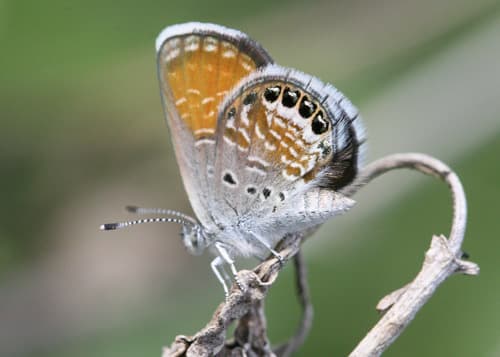
Western Pygmy-Blue
Common NameWestern Pygmy-Blue
Scientific NameBrephidium exilis
FamilyLycaenidae
SubfamilyPolyommatinae
Wingspan (mm)15
Wing Patternspotted
Primary Colorsgrey, brown, orange, black, white
HabitatArid regions, deserts, disturbed areas, coastal salt marshes, fields
Geographic RangeSouthwestern United States, Mexico, Central America
Host Plantssaltbush, pigweed, quinoa, amaranth
Flight PeriodYear-round in warmer climates; multiple broods from spring to fall elsewhere
Flight Stylefluttering
Conservation Statusleast-concern
Lifecycle NotesEggs are laid singly on the host plant. Larvae are small, green, and feed on the leaves and flowers of various chenopods and amaranths. Pupation occurs on or near the host plant, often in leaf litter.
Identification TipsIts extremely small size (the smallest butterfly in North America) is the primary identification feature. Look for the mottled grey-brown underside with a row of small black spots, often with a subtle orange band, and a white fringe along the wing edges.
Description
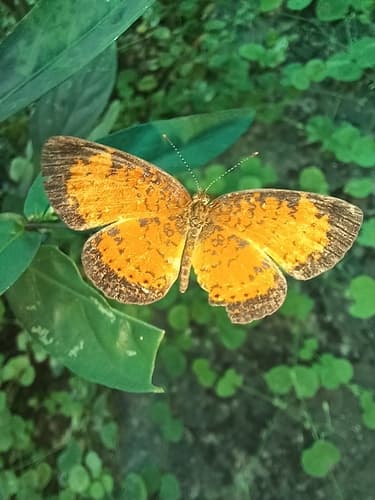
This is an exceptionally small butterfly with a greyish-brown underside featuring a distinctive pattern of small black spots ringed with white, and often a band of orange or copper on the hindwing. The upper side is typically a dull copper-orange with dark margins.