Western Tussock Moth
Common NameWestern Tussock Moth
Scientific NameOrgyia vetusta
FamilyErebidae
SubfamilyLymantriinae
Wingspan (mm)30
Wing Patterncryptic
Primary Colorsbrown, grey, black, white
HabitatOak woodlands, chaparral, mixed forests, urban areas, gardens
Geographic RangeWestern North America (British Columbia south to California, east to Idaho and Nevada)
Host Plantsoak, willow, apple, pear, alder, manzanita, ceanothus, Douglas-fir
Flight PeriodAugust to October
Flight Stylefluttering
Conservation Statusleast-concern
Lifecycle NotesFemales are flightless and lay eggs on their cocoons. Larvae are distinctive, hairy caterpillars with prominent tussocks of hair, often brightly colored, and can cause defoliation. They pupate in silken cocoons.
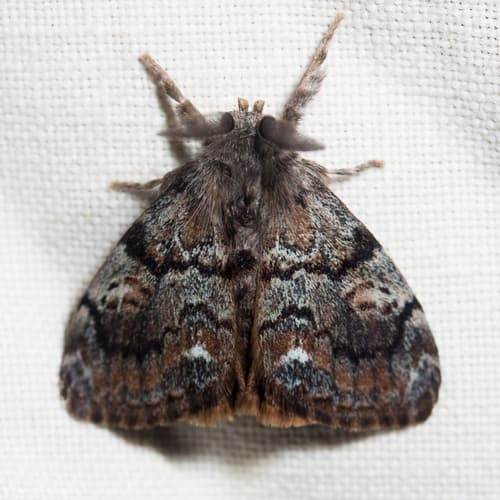
Identification TipsMales are identified by their mottled brown and grey forewings with wavy bands and white/pale blue spots. Females are wingless and remain on their cocoons. The hairy caterpillars are also very distinctive.
Description
A medium-sized moth with cryptic, mottled forewings in shades of brown, grey, and black, featuring distinct wavy bands and prominent white or pale blue spots near the hind margin. The body is hairy and grey-brown.