White-eyed Borer Moth
Common NameWhite-eyed Borer Moth
Scientific NamePapaipema leucostigma
FamilyNoctuidae
SubfamilyNoctuinae
Wingspan (mm)35
Primary Colorsbrown, dark brown, white
HabitatWetlands, marshes, bogs, moist fields, and areas with host plants
Geographic RangeEastern North America, from Nova Scotia south to Florida and west to Manitoba and Missouri
Host Plantscattail, bur-reed, sedges, various herbaceous wetland plants
Flight PeriodAugust to October
Conservation Statusleast-concern
Lifecycle NotesEggs overwinter, larvae hatch in spring and bore into the stems of various wetland plants, pupating within the stem or in the soil. Adults emerge in late summer to fall.
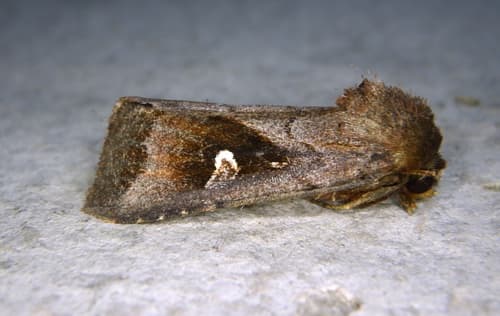
Identification TipsKey features include the robust, dark brown body and the distinctive, often kidney-shaped, bright white spot on each forewing, which gives the moth its common name.
Description
A medium-sized, robust moth with mottled dark brown and reddish-brown forewings, featuring a prominent, irregular white reniform spot. The head and thorax are densely hairy.