White-marked Tussock Moth
Common NameWhite-marked Tussock Moth
Scientific NameOrgyia leucostigma
FamilyErebidae
SubfamilyLymantriinae
Wingspan (mm)30
Primary Colorsbrown, grey, black, white
HabitatDeciduous and mixed forests, urban and suburban areas, orchards, parks
Geographic RangeEastern North America, from Newfoundland to Florida and west to Texas and Manitoba
Host Plantsoak, maple, birch, elm, apple, cherry, rose, willow, fir, spruce, pine
Flight PeriodMay to October (multiple broods)
Flight Stylefluttering
Conservation Statusleast-concern
Lifecycle NotesFemales are flightless and lay eggs on their cocoons. Larvae are brightly colored, hairy caterpillars with prominent red, yellow, and black tufts, including four dense white tussocks on the back and two long black hair pencils at the front and one at the rear. They pupate in silken cocoons.
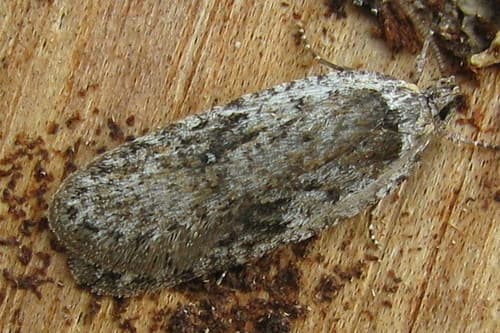
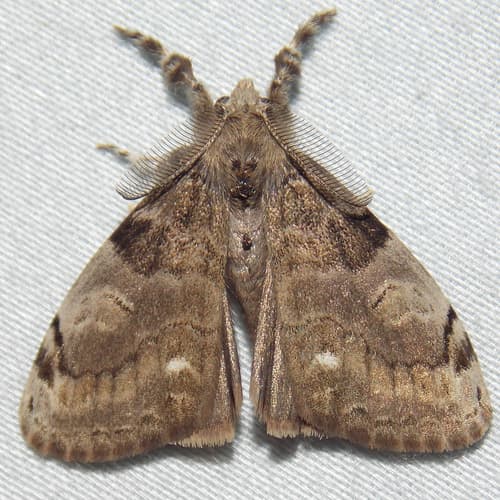
Identification TipsLook for the mottled brown and gray forewings with the prominent white spot on the male moth. The female is wingless. The most distinctive stage is the caterpillar, with its bright colors, four white dorsal tussocks, and two long black 'horns' at the front.
Description
The male White-marked Tussock Moth has mottled brown and gray forewings with irregular darker bands and a distinctive white spot near the outer margin. Its antennae are feathery, and its body is hairy.