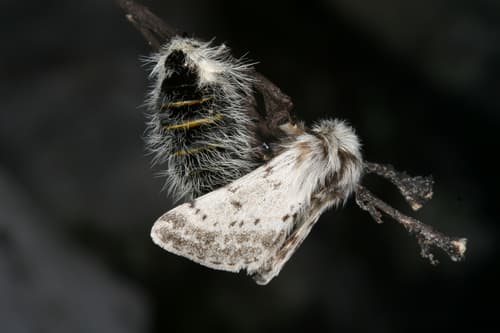
Alpine Brindled Moth
Common NameAlpine Brindled Moth
Scientific NameLycia alpina
FamilyGeometridae
SubfamilyEnnominae
Wingspan (mm)31.5
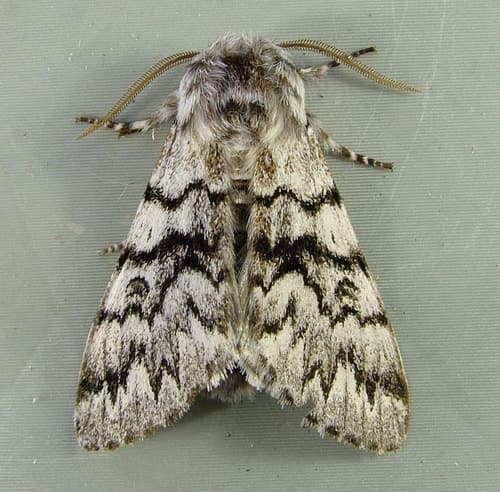
Primary Colorsgrey, white, black
HabitatAlpine and subalpine regions, rocky slopes, open woodlands, heathlands
Geographic RangeCentral and Southern Europe (Alps, Pyrenees, Carpathians), parts of Scandinavia and Russia
Host PlantsVaccinium, Calluna, Salix, Betula, Larix, Pinus, Juniperus
Flight PeriodApril to June
Flight Stylefluttering
Conservation Statusleast-concern
Lifecycle NotesFemales lay eggs on host plants, and the larvae, which are distinctive black caterpillars with yellow dorsal stripes and dense white hairs, feed from June to August. They pupate in the soil and overwinter as pupae, with adults emerging in spring.
Identification TipsMales are identified by their pale, mottled greyish-white wings and hairy body. Females are easily recognized by their wingless, spider-like form. The caterpillar is also highly distinctive with its black, yellow-striped, and densely hairy body.
Description
The male Alpine Brindled Moth has pale greyish-white wings with a mottled appearance from darker speckles and faint cross-lines, and a robust, hairy body. The female is wingless and resembles a large, hairy spider.