Western Panthea Moth
Common NameWestern Panthea Moth
Scientific NamePanthea portlandia
FamilyNoctuidae
SubfamilyPantheinae
Wingspan (mm)40
Primary Colorswhite, grey, black
HabitatConiferous forests, mixed forests
Geographic RangeWestern North America (British Columbia south to California, east to Montana, Wyoming, Colorado)
Host PlantsDouglas-fir, pine, fir
Flight PeriodJune to August
Flight Stylefluttering
Conservation Statusleast-concern
Lifecycle NotesLarvae are hairy and feed on the needles of various conifers. They pupate in a cocoon, often in leaf litter or soil, and overwinter as pupae before emerging as adults.
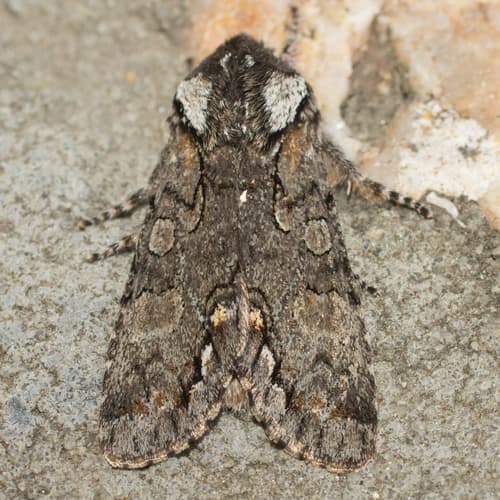
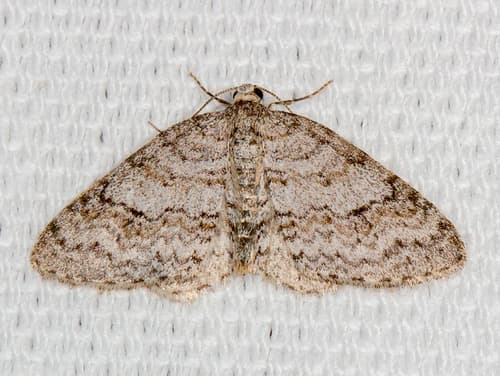
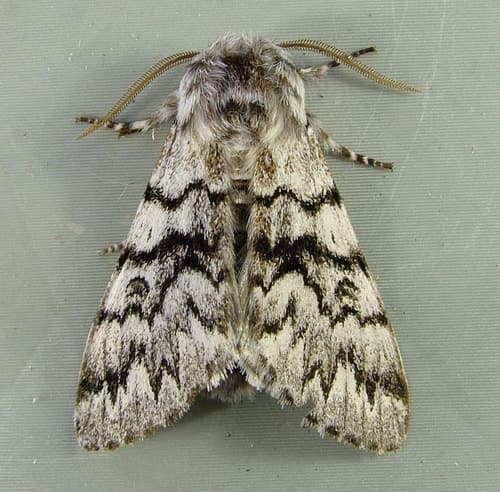
Identification TipsDistinguished by its distinctive black wavy lines and patches on a white and grey background, particularly the prominent black reniform spot and subterminal line on the forewings. The overall cryptic pattern is characteristic.
Description
A medium-sized moth with a fuzzy, greyish-white body and forewings featuring intricate, wavy black lines and patches on a mottled white and grey background, providing excellent camouflage.