Joyful Virbia Moth
Common NameJoyful Virbia Moth
Scientific NameVirbia aurantiaca
FamilyErebidae
SubfamilyArctiinae
Wingspan (mm)24
Wing Patternsolid
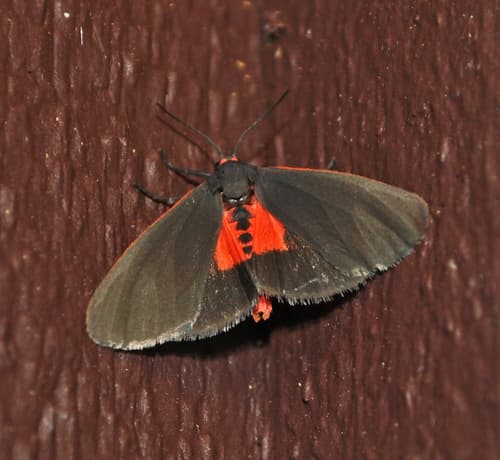
Primary Colorsdark gray, orange, black
HabitatOpen woodlands, fields, meadows, and disturbed areas.
Geographic RangeEastern North America, from southern Canada south to Florida and west to Texas.
Host Plantsdandelion, plantain, other herbaceous plants
Flight PeriodMay to October
Flight Stylefluttering
Conservation Statusleast-concern
Lifecycle NotesLarvae are hairy 'woolly bears' that feed on low-growing herbaceous plants. They typically overwinter as larvae and pupate in a cocoon in the spring.
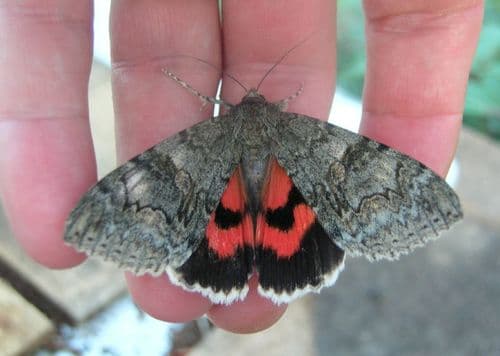
Identification TipsLook for the combination of dark forewings and a vibrant orange-red abdomen with black spots. The hindwings are also orange-red but are often mostly covered by the forewings when the moth is at rest.
Description
A small moth characterized by its dark gray to black forewings, which contrast sharply with its bright orange-red abdomen and hindwings, often visible as a triangular patch when at rest.