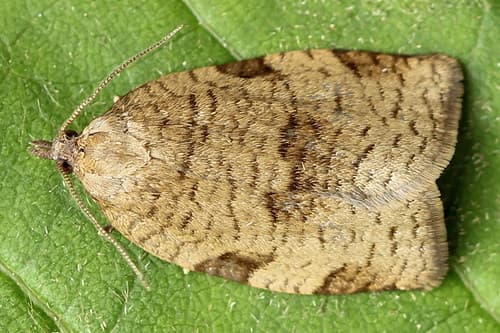
Large Ivy Tortrix
Common NameLarge Ivy Tortrix
Scientific NameLozotaenia forsterana
FamilyTortricidae
SubfamilyTortricinae
Wingspan (mm)21.5
Wing Patterncryptic
Primary Colorsbrown, tan
HabitatGardens, parks, woodlands, hedgerows, and areas with broad-leaved trees and shrubs, especially ivy.
Geographic RangeWidespread across Europe, North Africa, parts of Asia (e.g., Caucasus, Siberia, China, Japan), and introduced to North America (Pacific Northwest).
Host PlantsHedera helix, Quercus, Fagus, Betula, Acer, Prunus, Malus, Pyrus, Salix, Populus, Vaccinium, Rhododendron
Flight PeriodJune to August, sometimes into September
Flight Stylefluttering
Conservation Statusleast-concern
Lifecycle NotesEggs are laid on host plants. Larvae are greenish-grey with a dark head, feeding on leaves, often spinning them together. Pupation occurs within a spun leaf.
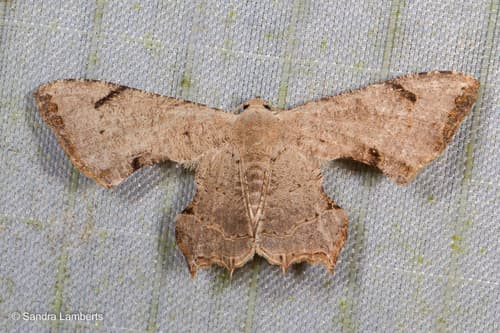
Identification TipsDistinguished by its relatively large size for a tortrix moth, broad forewings, and the characteristic mottled brown pattern with darker, somewhat wavy transverse markings. The common name points to its primary host plant, ivy.
Description
A medium-sized moth with broad, somewhat rectangular forewings that are a mottled light brown to tan, marked with darker brown, irregular transverse bands and patches, providing excellent camouflage.