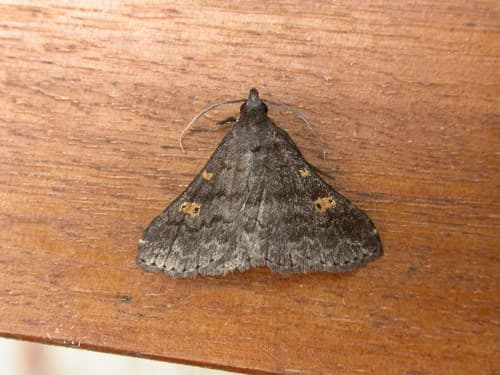
No widely recognized common name
Common NameNo widely recognized common name
Scientific NameCharissa predotae
FamilyGeometridae
SubfamilyEnnominae
Wingspan (mm)27.5
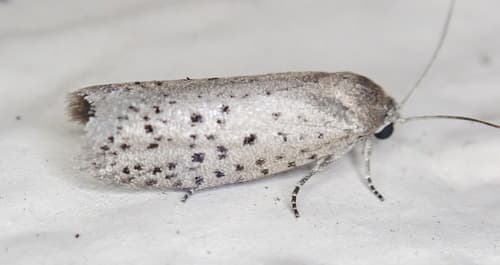
Primary Colorspale grey, whitish, light brown, dark brown
HabitatDry, rocky areas, scrubland, grasslands, often on limestone soils.
Geographic RangeSouthern Europe, North Africa, Middle East
Host PlantsThymus, Genista, various low-growing herbaceous plants
Flight PeriodMarch to October
Flight Stylefluttering
Conservation Statusleast-concern
Lifecycle NotesFollows a typical moth lifecycle: egg, larva (caterpillar), pupa, adult. Larvae are often twig-like in appearance for camouflage, feeding on herbaceous plants. Pupation occurs in the soil or leaf litter.
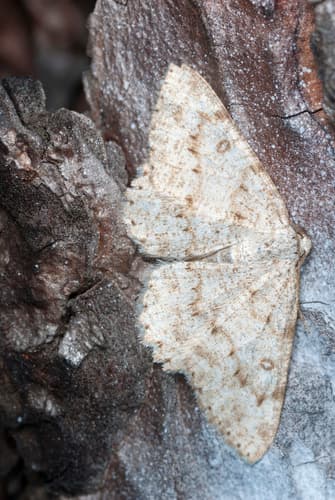
Identification TipsDistinguished by its cryptic, mottled grey-brown coloration, faint transverse lines, and a small discal spot on the forewing. The overall pale ground color with dense speckling is characteristic. Definitive identification often requires examination of genitalia due to similarity with other Charissa species.
Description
A small to medium-sized moth with highly cryptic wings, predominantly pale grey to whitish, heavily mottled and speckled with light and dark brown markings, providing excellent camouflage against tree bark or rocks.